Category Archives: Waterjet & Laser

Architectural Laser Cut Panels That Perform

Architectural Laser Cut Panels That Perform

A screen can be the feature that makes a façade memorable, or the detail that solves a difficult privacy and shading problem without closing in a space. Architectural laser cut panels give builders, designers and fabricators a practical way to achieve both. With the right material, pattern and cutting process, they can deliver crisp visual detail while standing up to real site conditions.

For commercial entries, balconies, courtyards, pergolas, stairwells and boundary treatments, the best result is rarely about choosing the most elaborate pattern. It is about matching the panel to its purpose, its fixing method and the environment around it. That early thinking prevents costly changes once material is on the cutting bed or panels are ready for installation.

What Architectural Laser Cut Panels Need to Do

Decorative metalwork is often asked to perform several jobs at once. A panel may need to create privacy from a neighbouring property, reduce glare on an exposed western elevation, allow airflow through an outdoor area and carry the visual language of the wider building. It also needs to be practical to fabricate, transport, coat and install.

This is why design intent needs to be converted into production-ready information. A pattern that looks balanced on a screen may have narrow bridges between cut-outs, unsupported internal sections or corners that concentrate stress. Those details affect how the panel handles during cutting and how it performs after installation.

Good architectural panels are designed around the realities of the job. That includes overall dimensions, sheet thickness, frame or post locations, drainage, expansion, expected wind load and access for fitting. The pattern should work with these constraints rather than be treated as a separate decorative layer.

Start With the Job, Then Select the Material

Material choice affects appearance, cost, durability and the cutting method available. There is no single best option for every project.

Aluminium for low weight and outdoor versatility

Aluminium is a common choice for balcony screens, gates, fencing infill and façade features because it is light, corrosion resistant and well suited to powder coating. It is easier to handle on site than heavier steel panels, particularly where large sections need to be lifted into upper-level positions.

Its lighter weight does not remove the need for considered fixing. Wide panels can still flex in wind, and thin aluminium can dent if it is not supported correctly. The right thickness depends on panel size, open area within the pattern and the supporting frame.

Mild steel for strength and a broad finish range

Mild steel offers strength and is often economical for architectural screens, internal fit-outs and framed external panels. It can be painted, powder coated or specified for a weathered finish where the project calls for a deliberately aged appearance.

For external work, coating preparation and edge protection matter. Cut edges, welds and folded returns all need to be addressed as part of the finishing system. A well-cut panel still needs the correct corrosion protection for its location.

Stainless steel for demanding environments

Stainless steel is suited to high-traffic settings, food-related environments and projects near the coast where corrosion resistance is a priority. It provides a clean, premium finish but has a higher material cost and should be selected with the final finish in mind. Brushed, polished and bead-blasted surfaces can all show handling marks differently.

When panels are installed near salt air, material grade, fixings and contact with dissimilar metals all deserve attention. A stainless panel can last exceptionally well, but only when the complete assembly is designed for the environment.

Pattern Design: Detail Must Still Be Buildable

The most successful laser-cut patterns have visual rhythm from a distance and clean detail up close. Repeating geometric forms, organic leaf motifs, abstract linework, branding elements and custom artwork can all work well. The question is whether the design leaves enough material to hold the panel together.

Fine internal features and very narrow webs can become fragile, particularly on large panels or in thinner sheet. They may also increase cutting time and affect price. This does not mean a detailed pattern is off limits. It means the design should be reviewed for minimum feature size, panel stiffness and realistic production tolerances before final approval.

Open-area percentage is another useful measure. A highly open pattern allows more light and airflow but gives less privacy and may reduce the panel’s visual weight. A denser layout provides stronger screening, though it can catch more wind and create a darker space behind it. For pergolas and sun screens, the orientation of the cut-outs can be as important as the amount of open area.

If the design includes text, logos or recognisable shapes, consider what needs to remain connected to the surrounding sheet. Letters with enclosed centres, such as O, P or A, need bridges unless the design uses a separate backing panel. This is a small production detail that can substantially change the finished look.

Laser Cutting or Waterjet Cutting?

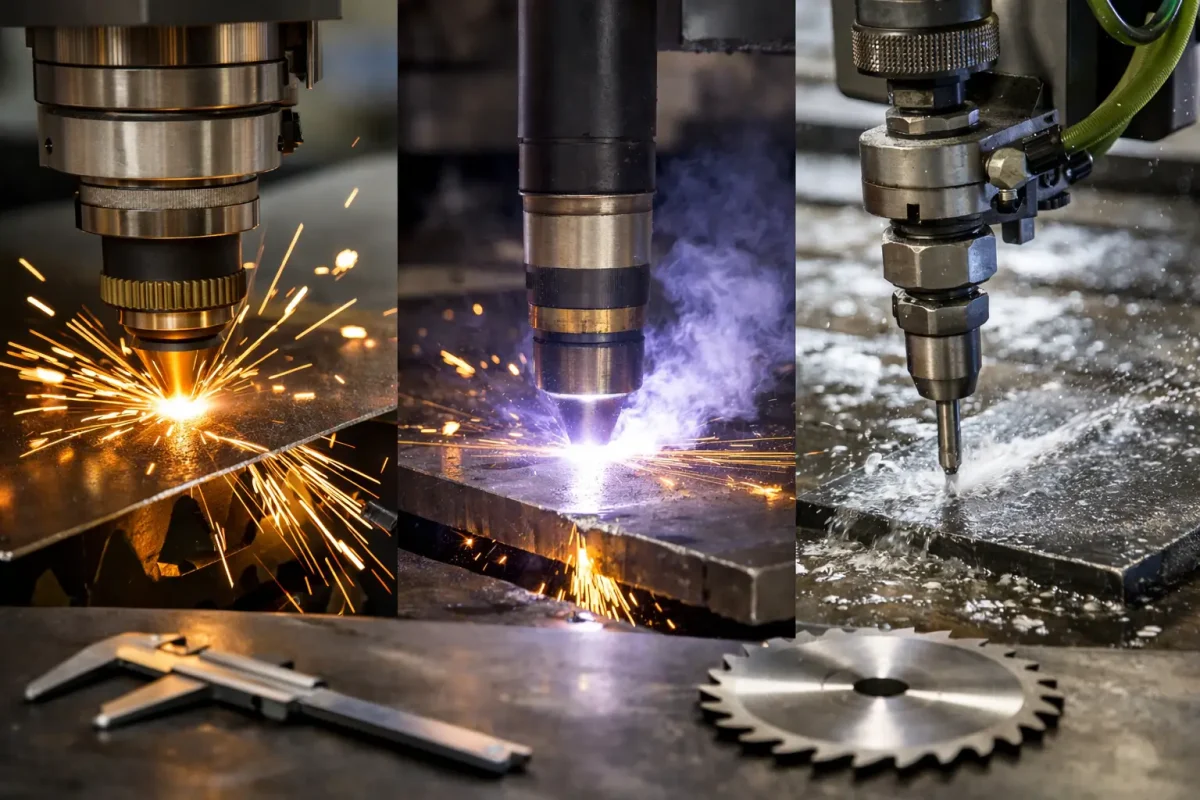
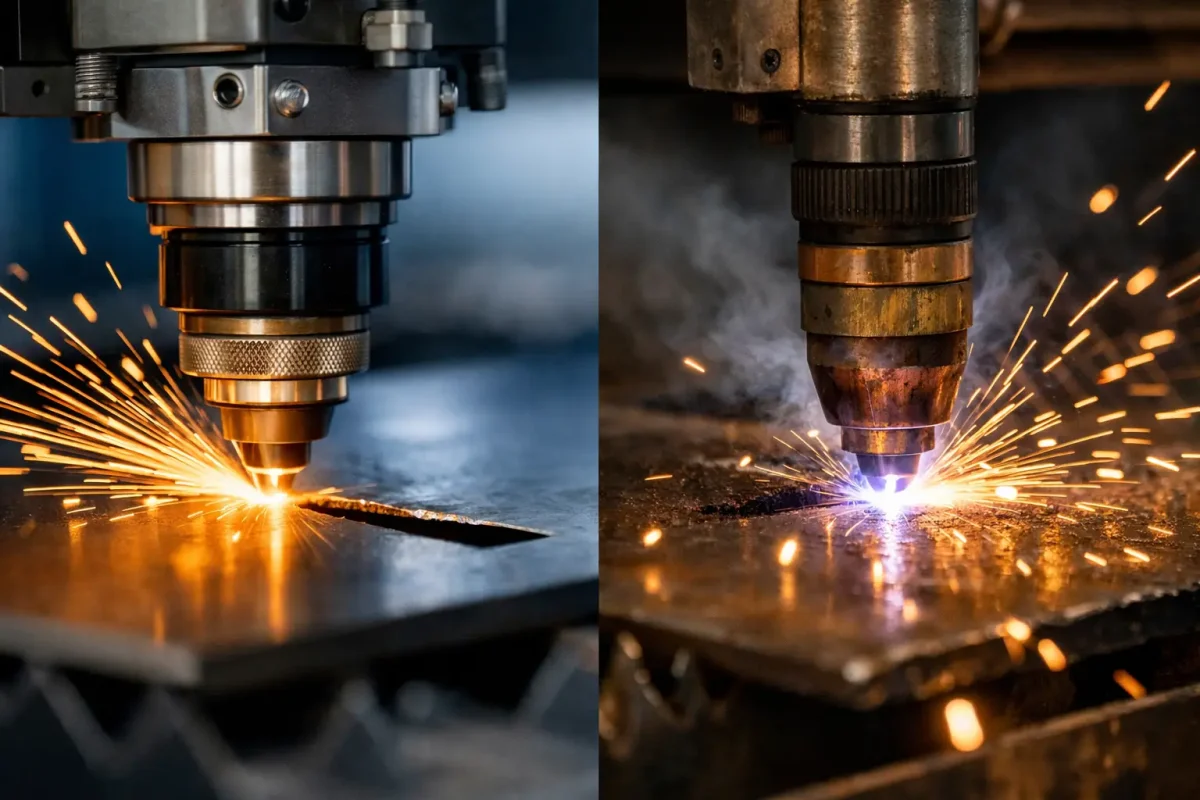
Laser cutting is an efficient choice for many architectural laser cut panels, particularly where sheet metal patterns require speed, repeatability and sharp detail. It is well suited to production runs, standard metal sheets and decorative profiles that need a clean, accurate result.

However, laser cutting is a thermal process. Heat can affect certain materials, thicknesses and intricate areas of a design. In some jobs, especially where heat distortion, heat-affected edges or specialised material properties are a concern, waterjet cutting may be the better option.

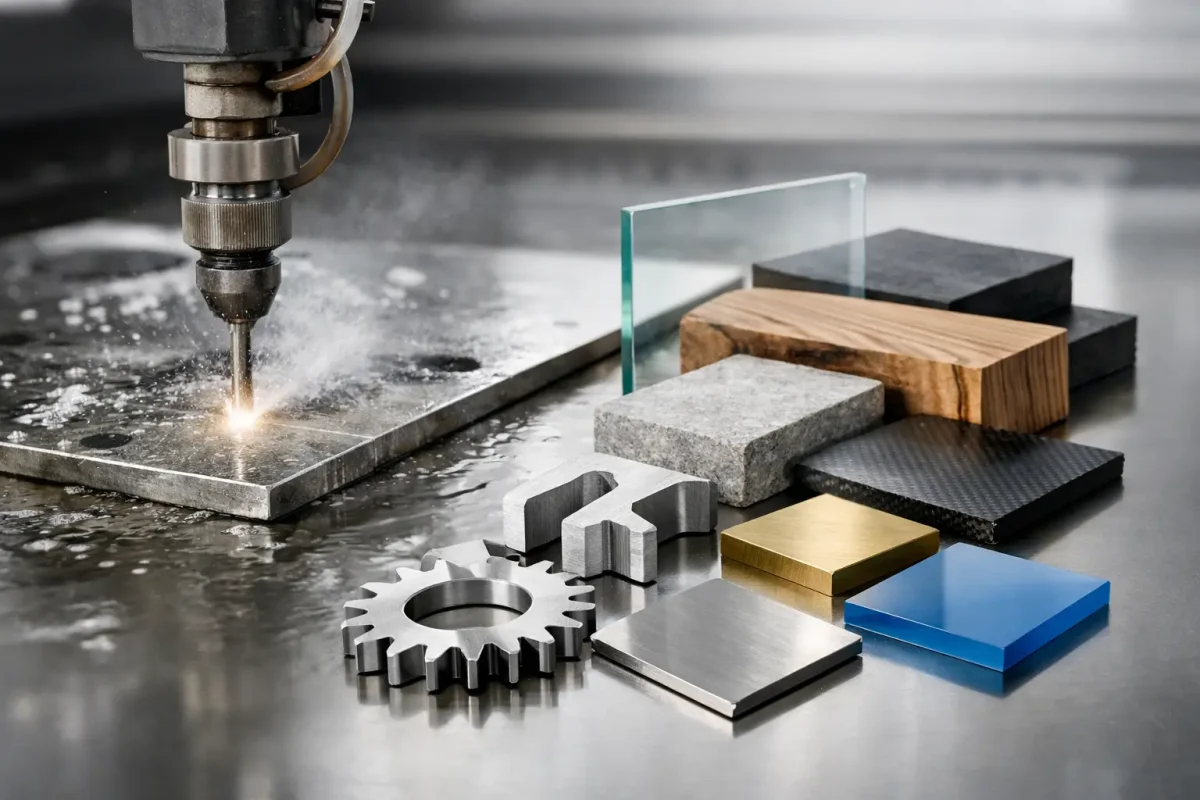
Waterjet uses a high-pressure stream, up to 60,000 PSI, to cold-cut material without introducing heat into the workpiece. That makes it valuable for thicker plate, heat-sensitive applications and materials that are not ideal for laser processing. It can also cut a broad range of non-metal materials, giving project teams more flexibility where screens, signage, feature linings or layered elements combine different products.

The right process depends on the material, thickness, detail, quantity, required edge quality and delivery date. A capable cutting partner should assess these factors rather than forcing every job through one machine. At Waterjet & Laser SA, having both CNC laser and waterjet capability on site helps customers choose the process that suits the finished requirement.

Plan for Finishing and Installation Before Cutting

A cut panel is only one component of the completed installation. Allowance for finishing should be included in the drawing stage. Powder coating adds a durable colour finish, but cut edges and tight internal corners must be cleaned and prepared properly. If panels are folded, framed or welded, confirm whether cutting occurs before or after those operations.

Fixing points deserve the same attention as the decorative pattern. Holes can be incorporated into the panel for bolts, screws or stand-off fixings, provided their location works with the structure behind. Concealed frames create a clean floating appearance, while visible fixings can become part of an industrial design language. Either approach needs adequate edge distance so holes do not weaken narrow borders.

For outdoor panels, leave room for drainage and cleaning. Horizontal ledges can collect dirt and moisture, while very tight gaps may be difficult to maintain. Where panels face public areas, avoid sharp exposed edges and ensure the design meets the project’s safety requirements.

Large panels also need a transport plan. Consider maximum sheet size, access through gates or buildings, lifting equipment and whether sections need to be joined on site. Splitting a design across multiple panels can work well when joins align with posts, frames or repeating elements in the artwork.

Supply Clear Files for Accurate Cutting

A dimensioned drawing and a clean vector file reduce uncertainty and speed up quoting. DXF files are generally preferred for CNC cutting, while PDF drawings remain useful for showing overall dimensions, finishes, orientation and installation intent. If the design began as artwork, it may need tracing or adjustment before it can be cut accurately.

Before production, confirm material type and thickness, final panel sizes, quantity, tolerances, cut-outs, fixing holes and the required finish. It is also worth confirming which face is the visible face, particularly for brushed stainless steel, aluminium with a protective film or panels that have a directional pattern.

A small sample can be worthwhile for high-profile jobs. It allows the project team to check scale, open area, edge appearance and powder-coat colour before committing to full-size sheets. This is especially useful when the pattern is new, the panels are highly visible or the design needs to coordinate with stone, timber or cladding already selected.

The strongest architectural panels are not merely decorative sheets with shapes cut into them. They are accurately produced components designed to fit, perform and keep looking right after years in service. Start with the purpose of the space, give the material and fixing details proper attention, and let the pattern do the work it was designed to do.

Is Eco Friendly Waterjet Cutting Really Better?

Is Eco Friendly Waterjet Cutting Really Better?

A thick stainless bracket with a heat-affected edge can create more waste than the offcut it was cut from. It may need extra finishing, lose corrosion resistance around the cut, or fail to meet a tight tolerance altogether. That is where eco-friendly waterjet cutting earns its place: it is not simply about using water, but about reducing avoidable rework, preserving usable material and selecting a cutting method that suits the job.

For Adelaide fabricators, builders, manufacturers and designers, sustainability is increasingly practical. Material costs matter. Disposal costs matter. So do delayed jobs, rejected parts and the energy used to remake them. Waterjet cutting can support a more resource-conscious workflow, provided its strengths and limitations are understood.

What makes waterjet cutting more environmentally considerate?

A CNC waterjet directs a very high-pressure stream of water, often combined with abrasive garnet for hard materials, through a programmed cutting path. At pressures up to 60,000 PSI, it can cut steel, stainless steel, aluminium, stone, composites, rubber and many other materials with impressive accuracy.

The key environmental advantage is the cold-cut process. Unlike thermal cutting methods, waterjet cutting does not create a heat-affected zone in the material. There is no heat distortion around the edge, no burnt coating and no need to allow for a material changing shape as it cools.

That directly affects waste. When a part comes off the bed close to its required dimension, with a clean edge and stable material properties, there is less grinding, less secondary machining and fewer rejected components. For a one-off architectural feature, that may prevent expensive material from becoming scrap. For repeat production work, the savings can accumulate across every batch.

Waterjet cutting also avoids the fumes associated with melting or burning material. This can make it a sensible option for materials that respond poorly to heat, including certain laminated, coated or composite products. It does not remove the need for proper workplace controls, particularly around abrasive handling and slurry, but it does avoid a thermal cutting source at the point of cut.

Eco friendly waterjet cutting is about the whole process

Calling any industrial process environmentally friendly without qualification is too simple. Waterjet systems use electricity to pressurise water, and abrasive cutting uses garnet. The spent water and abrasive form slurry that must be managed correctly, especially when cutting materials that may introduce metal particles or other contaminants.

The better question is whether waterjet is the most efficient process for the material, thickness and required finish. A well-run job considers more than the cutting stage. It considers material yield, setup time, nesting, edge quality, transport, finishing and the likelihood of needing to make the part again.

For example, a high-accuracy aluminium component might be cut without introducing heat distortion that would otherwise require straightening. A complex stainless steel profile can be nested closely with other parts to reduce offcuts. Foam, rubber and softer materials can be cut precisely without the compressed edges or melting that some thermal processes may cause.

These outcomes are not automatic. They depend on accurate drawings, suitable tolerances, sensible part orientation and a cutting partner that understands the difference between a nominally cut part and a production-ready one.

Less heat can mean less downstream work

Heat is often the hidden source of material loss in fabrication. A warped sheet can be difficult to recover. A hardened edge can slow later machining. A discoloured or oxidised area may need cleaning before a visible architectural finish is acceptable.

Because waterjet is cold cutting, the cut edge retains the material’s original characteristics more reliably. This is particularly valuable where flatness, strength, finish or corrosion performance matters. It can also reduce the chemicals, consumables and labour associated with cleaning up a heat-affected edge.

That does not mean waterjet is always the fastest route. Laser cutting can be an excellent choice for thinner metals, particularly when speed and repeatability are the priority. The most responsible choice is often the one that produces the required part efficiently the first time, rather than applying one process to every job.

Better nesting protects valuable sheet material

Material is often the largest cost in a cut-part job, and it carries an environmental cost before it reaches the cutting bed. Efficient CNC nesting places parts carefully within a sheet to maximise yield while maintaining enough separation for clean cutting.

Close nesting is especially useful for costly stainless steel, aluminium and decorative metals. Even small improvements in yield can reduce the number of sheets required over a project. The remaining offcuts may also be large enough to retain for smaller future components rather than being sent straight to recycling.

Good nesting needs practical judgement. Packing parts too tightly can compromise cut quality or make handling awkward, while excessive tabs or complicated break-out work can add labour. The aim is not theoretical zero waste. It is a dependable balance between material efficiency, safe handling and finished-part quality.

Where waterjet makes the strongest practical difference

Waterjet cutting is particularly useful when the job has a combination of thickness, intricate detail and sensitivity to heat. It gives fabricators and project managers flexibility where conventional thermal cutting may introduce unwanted compromises.

For structural and industrial work, this may include thick steel plates, brackets, flanges, wear components and machine parts. For architectural and design work, it can mean intricate screens, signage elements, decorative metalwork and custom profiles that need crisp detail without visible heat marks.

The process is also valuable for mixed-material work. A project may involve stainless steel alongside aluminium, rubber, foam or composite materials. Rather than forcing every component through a heat-based process, waterjet can cut many of these materials on the same type of machine while protecting their condition.

Waterjet & Laser SA uses on-site CNC waterjet and laser capability so the process can be selected around the actual requirement. That matters because the lowest-impact option is not always one machine or one marketing claim. It is the process that delivers the correct edge, tolerance and turnaround without unnecessary material loss or secondary work.

The trade-offs worth discussing before cutting

Waterjet is precise and versatile, but it is not a free-cutting process. Abrasive waterjet jobs consume garnet, require high-pressure pumping and generally take longer than laser cutting on some thin metal profiles. If the specification does not require cold cutting or the material is thin and straightforward, laser may offer a faster and more economical result.

Cut quality also depends on thickness, material and speed. A faster cut can leave more taper or striations than a slower, higher-quality cut. For components that will be welded, painted or hidden within an assembly, a standard cut edge may be entirely appropriate. For an exposed architectural part or a precision mating surface, a finer finish may justify additional cutting time.

It is worth clarifying the intended use of each part before production begins. Useful details include the material grade and thickness, required tolerances, whether edges will be visible, any later folding or welding, quantity, and whether the supplied file is ready for cutting. Those details help avoid over-specifying the job or discovering too late that a different process would have been better.

How customers can reduce waste before the job starts

The most effective sustainability decisions are often made before a sheet is loaded. Start with a clean, accurately scaled DXF or other suitable production drawing. Check that duplicated lines, open vectors and unnecessary detail have been removed, as these can increase cutting time and create avoidable errors.

Consider standard sheet sizes during design where possible. A minor adjustment to a part layout can improve nesting and reduce offcuts without changing the final function. If multiple components use the same material, grouping them into one run may also make better use of the available sheet.

Be clear about tolerances rather than applying the tightest possible tolerance everywhere. Precision is valuable where parts interface, align or perform a critical function. It is less useful on a non-critical cover plate, and unnecessary precision can add time and cost. The same principle applies to edge finish: specify the level the project needs, not more.

Finally, plan what happens to offcuts and finished parts. Reusable remnants can be retained for future work. Metal scrap should enter an appropriate recycling stream. Finished components should be packed and transported in a way that protects the cut edge, because damage during handling can undo the savings achieved during production.

Precision is a practical form of sustainability

The environmental case for waterjet cutting is strongest when it is measured in outcomes: fewer remakes, less heat-related damage, efficient use of valuable material and a process selected for the application rather than habit. Water alone does not make a cutting method sustainable. Careful planning and accurate execution do.

If a project involves thick material, intricate profiles, mixed materials or an edge that cannot be compromised by heat, ask for the cutting method to be assessed before production starts. A better decision at that point can save material, time and unnecessary work long after the parts leave the cutting bed.

Fast Turnaround Cutting Service That Keeps Work Moving

Fast Turnaround Cutting Service That Keeps Work Moving

A fabrication job can stop for one missing bracket, panel or plate. The crew is ready, materials are on site and the next trade is booked, but a late-cut component holds up the entire sequence. A fast turnaround cutting service is not simply about receiving parts quickly. It is about receiving accurate, usable parts that fit the job, arrive when promised and do not create more work at the bench.

For Adelaide fabricators, builders, manufacturers and designers, the right cutting partner provides capacity when in-house equipment is busy, unsuitable for the material or unable to achieve the required detail. The best result comes from matching the cutting method, material and job urgency before production starts.

What a fast turnaround cutting service should deliver

Speed has limited value if the finished part is out of tolerance, heat-affected or difficult to weld, fold or assemble. A reliable service balances lead time with the details that protect the rest of your schedule: clear quoting, practical advice, correct material handling, accurate nesting and dependable dispatch.

That means asking the right questions at the beginning. Is the part made from mild steel, stainless steel, aluminium, foam or another material? Does it need a crisp profile for a decorative screen, a clean edge for visible stainless work, or a production-ready blank for further fabrication? Is the drawing complete, and are all dimensions, holes and internal radii practical for the selected process?

A cutting provider with both CNC laser and waterjet capability can make this decision based on the job rather than forcing every order through one machine. That flexibility matters when a deadline is tight. It reduces the risk of choosing a process that is quick at the machine but costly in rework afterwards.

Laser or waterjet: choose the process that protects the job

Laser cutting is often the efficient choice for many sheet-metal components, particularly where repeatable profiles and rapid production are required. It is well suited to steel, stainless steel and aluminium applications within the appropriate material and thickness range. For brackets, gussets, panels, machine parts and production batches, laser cutting can provide a clean, accurate result at speed.

However, laser is a thermal process. Heat can affect the edge of some materials and may be a consideration where distortion, finish or material properties are critical. Thin sheet can be particularly prone to movement if a design has narrow sections or extensive internal detail. The correct settings, nesting and process selection make a substantial difference, but the heat factor still needs to be considered.

Waterjet cutting uses a high-pressure stream of water, with abrasive added for harder materials, to cut without creating a heat-affected zone. At pressures up to 60,000 PSI, it can produce intricate shapes while preserving material integrity. This cold-cut process is especially valuable for thicker materials, heat-sensitive materials, specialised alloys and jobs where distortion is not acceptable.

Waterjet is also highly versatile. Alongside steel, stainless steel and aluminium, it can cut materials such as foam and many other products that are not suitable for laser cutting. There are trade-offs: depending on material, thickness and geometry, waterjet may take longer than laser. But where avoiding heat distortion prevents a rejected part, a difficult weld or hours of straightening, it is often the faster overall route.

The practical question is not “which machine is best?”

The practical question is which machine produces the best finished component for the required date. A simple laser-cut steel plate may be completed quickly and economically. A detailed aluminium component that must remain flat, or a thick stainless part with demanding edge requirements, may be better suited to waterjet. An experienced cutting team should explain that choice in plain language rather than treating every job as identical.

How to reduce lead time before cutting begins

Most avoidable delays occur before the first sheet is loaded. Clear information allows a cutter to assess the work quickly, confirm the process and move the order into production without repeated calls or drawing changes.

For a straightforward quotation and faster production release, provide these four essentials:

  • A clear CAD file where available, preferably with dimensions and scale confirmed.
  • Material type, thickness and whether material is supplied or required.
  • Quantity, required date and whether parts need delivery or collection.
  • Any critical requirements, such as visible edges, tight tolerances, bend allowances, grain direction or no-heat cutting.

A PDF is useful for checking the intended finished part, even where a DXF or other cutting file is supplied. If the drawing is a sketch, include all key dimensions and identify which measurements are critical. This is particularly important for components that must mate with existing work, such as replacement machine parts, site-installed brackets and folded assemblies.

It also pays to consider the full fabrication sequence. If a part will be folded after cutting, hole positions and cut-outs must allow for bends. If it will be welded, consider where tabs, slots or edge preparation may save time during fit-up. If it will be powder coated, painted or used in an architectural feature, tell the cutting provider which faces will remain visible. These details are small on a drawing but can have a major effect on the finished result.

Urgent work still needs a realistic production plan

A genuine urgent job deserves a direct answer, not a vague promise. Turnaround depends on material availability, thickness, quantity, design complexity, machine loading, programming requirements and delivery distance. A single simple part may be turned around far more quickly than a large batch of thick, highly detailed components, even if both are described as urgent.

The most effective approach is to state the hard deadline early. If parts are needed for a Friday installation, say so at quotation stage. The cutting team can then assess whether the material is available, whether laser or waterjet is the better option and when collection or delivery can realistically occur.

There can also be ways to protect the programme. For example, a priority batch of the first components needed for assembly may be cut ahead of the balance of the order. A design may be adjusted to use available material sizes more efficiently. Or an alternative material thickness may be discussed where it remains fit for purpose. These are project decisions, not shortcuts, and they should only be made with the customer’s approval.

Accuracy matters more when the clock is running

When deadlines are close, it is tempting to focus only on cutting speed. Yet inaccurate parts create the slowest outcome of all. An oversized hole, a missed internal cut-out or a distorted panel can hold up fabrication longer than a short wait for properly cut replacements.

CNC-controlled cutting provides repeatability across a batch, which is essential for parts that need to interchange or assemble consistently. Good file checking and material identification are equally important. Stainless steel and aluminium can look similar at a glance in a busy workshop, but they behave differently in use and must be handled accordingly.

Quality control should be practical and job-specific. Critical dimensions, hole locations, edge condition and part quantity should be checked against the approved drawing before dispatch. For architectural and custom work, it may also include confirming orientation, pattern layout and the visual appearance of the cut. This attention gives installers and fabricators confidence that the parts can go straight from delivery to the next operation.

Local service keeps communication and delivery practical

Working with a local Adelaide cutting partner makes it easier to resolve details quickly. A drawing can be discussed with someone who understands fabrication realities, material can be checked where necessary, and collection can be coordinated around workshop schedules. For jobs outside metropolitan Adelaide, dependable delivery planning is just as important, particularly when parts are required at a regional site or by a country fabricator.

Waterjet & Laser SA combines on-site CNC laser and waterjet cutting so customers can select the process that suits the application, not just the first available machine. That capability supports everything from production components and construction parts to intricate architectural patterns and custom designs.

The most useful fast turnaround cutting service is one that treats your deadline as part of the specification. Send clear information, identify the components that matter first and choose a provider that can balance speed with precision. When the parts arrive clean, accurate and ready for the next stage, the rest of the job keeps moving.

Abrasive Waterjet Cutting Services in Adelaide

Abrasive Waterjet Cutting Services in Adelaide

A warped stainless bracket, a burnt aluminium edge or a part that misses its critical dimensions can hold up an entire fabrication job. Abrasive waterjet cutting services provide a practical answer when material integrity, accurate profiles and clean results matter just as much as turnaround time. Using a high-pressure stream of water mixed with abrasive garnet, waterjet cutting shapes demanding materials without introducing heat into the cut.

For Adelaide fabricators, builders, manufacturers and designers, that cold-cut capability can remove a common source of rework. It allows intricate components, one-off parts and repeat production work to be cut accurately across a wide range of materials, while preserving the original properties of the material.

What abrasive waterjet cutting does differently

Abrasive waterjet cutting uses water pressurised to as much as 60,000 PSI, combined with a fine abrasive, to cut through hard materials. The process works by erosion rather than melting, burning or mechanically shearing the material. That distinction has real consequences for the finished part.

Laser cutting is exceptionally fast and effective for many sheet-metal applications. However, because laser is a thermal process, it creates a heat-affected zone. On some jobs that is not an issue. On others, particularly thicker material, heat-sensitive metals or parts requiring a high-quality edge close to the cut line, it can lead to distortion, hardening, discolouration or additional finishing work.

Waterjet cutting avoids that heat-affected zone. The material stays cold throughout the process, helping to maintain its structural properties and appearance. It also produces no hazardous cutting fumes, which is a useful consideration for customers seeking a cleaner material-processing option.

When abrasive waterjet cutting services are the right fit

Waterjet is often selected when the job involves thickness, material variety or a profile that would be difficult to produce cleanly with conventional methods. Steel, stainless steel and aluminium are regular applications, but the process can also cut materials such as stone, tile, glass, rubber, foam and composites.

For a fabrication business, this flexibility means fewer compromises when a drawing includes mixed materials or when the exact material has not been finalised at the start of a project. For architectural work, it opens up detailed decorative panels, custom motifs, signage components and feature pieces without the heat marks associated with thermal cutting. For industrial customers, it supports accurate flanges, brackets, machine parts, wear components and replacement pieces where the fit needs to be right the first time.

It is particularly valuable where the finished edge will remain visible or where a part must be welded, bent, machined or assembled after cutting. A clean, accurate cut can reduce downstream preparation and keep the rest of the job moving.

Waterjet is not automatically the best choice for every part. If you need high-volume, thin sheet-metal components with straightforward geometry, laser cutting may be the faster and more economical process. If the workpiece is particularly thick, heat-sensitive or made from a non-metallic material, waterjet may be the stronger option. The right process depends on the drawing, material, thickness, tolerance, edge requirement and quantity required.

Precision starts before the machine runs

A quality result is not just about the cutting table. It begins with clear information. A usable CAD drawing, accurate dimensions, the intended material and thickness, quantity, and any critical tolerances give the cutting team the information required to plan the job properly.

For customers supplying DXF files, it is worth checking that all lines are joined, dimensions are correct and duplicate geometry has been removed before the file is sent. This avoids delays and helps ensure the programmed toolpath reflects the intended design. If a drawing is still being developed, a conversation early in the process can identify details that may affect cost, cut quality or lead time.

Small design decisions can make a significant difference. Very tight internal corners may need a radius that reflects the width of the waterjet stream. Narrow webs and fine features need to be assessed against the thickness and type of material. Hole size, edge distance and required tolerances should be called out clearly where they are critical rather than assumed across the whole part.

This is where experienced local service adds value. The goal is not simply to cut what appears on screen. It is to supply parts that work in fabrication, installation or final assembly.

Kerf, taper and tolerances

Waterjet cutting removes a narrow path of material known as the kerf. Like any cutting process, that kerf needs to be allowed for during programming so the finished dimensions match the drawing. Modern CNC waterjet equipment manages this accurately, including compensation for the slight taper that can occur in a cut.

Tolerance expectations should always be discussed in the context of the job. Many fabrication and architectural parts can be cut accurately to drawing requirements without complication. Components that mate with precision-machined parts, use press fits or require extremely close tolerances may need a secondary machining operation after cutting. Being clear about this upfront is the most reliable way to avoid surprises at assembly.

Material versatility without unnecessary rework

The ability to cut different materials on the same type of machine is one of waterjet’s strongest advantages. A stainless-steel cover plate, an aluminium bracket and a rubber gasket can each demand different handling and different cutting approaches. Waterjet gives project teams a practical way to source accurately cut components without changing to a completely different process for every material.

The cold-cut method is especially useful for aluminium and stainless steel. Aluminium can be prone to heat distortion, while stainless steel can show heat tint or require cleaning after thermal cutting. Waterjet avoids these issues and leaves a finish that is often ready for the next stage of production.

There are trade-offs. Abrasive waterjet cutting is generally slower than laser on thin, simple metal profiles, and the abrasive used in cutting forms part of the job cost. Yet on material where heat damage would create scrap, extra labour or a visible defect, the overall project cost can be lower. The most economical cutting method is the one that delivers usable parts with the least downstream correction.

From one-off design to repeat production

Abrasive waterjet is well suited to both custom work and production runs. A designer may need a single prototype to test a pattern or fit-up. A maintenance team may need an obsolete part copied from a sample. A manufacturer may require repeat sets of components on a schedule that supports their own production program.

In each case, consistency matters. Once a drawing has been checked and programmed, repeat parts can be produced to the same profile, helping maintain quality from the first component through to later orders. This also makes waterjet a useful outsourced capacity option when an in-house workshop is busy, equipment is unavailable or the material falls outside the capability of existing machinery.

At Waterjet & Laser SA, onsite CNC waterjet and laser capability means the cutting method can be matched to the job rather than forcing every project through one process. That choice supports better outcomes for customers who need speed on one component, cold-cut accuracy on another, or both across the same project.

Planning a smoother cutting job

The best cutting jobs are planned around the finished requirement, not just the shape. Consider how the part will be handled after it leaves the cutting table. Will it be folded, welded, powder coated, polished, installed outdoors or assembled with other components? These details can influence material selection, tolerances and the preferred cutting process.

Allowing reasonable lead time is also worthwhile, particularly for larger batches, unusual materials or work that needs to align with fabrication and site schedules. A local provider with reliable Adelaide metropolitan and country delivery coverage can help reduce the risk of parts sitting in transit while the next trade waits.

If you are comparing quotes, look beyond the per-part figure. Check whether the quote reflects the correct material, thickness, quantity and required finish. Ask whether drawing review, programming, material handling and delivery are included. A cheaper quote can become expensive if the parts arrive late, need extensive cleanup or do not fit the job.

A well-prepared drawing and a clear conversation at the start give abrasive waterjet cutting its best advantage: accurately cut parts that arrive ready to move into the next stage of your work.

Foam Waterjet Cutting Service for Precise Parts

Foam Waterjet Cutting Service for Precise Parts

A foam part can look simple on a drawing and still cause real problems on the workshop floor. Ragged edges, crushed cells, melted surfaces, and dimensions that drift from one part to the next all create extra fitting, wasted material, and delayed assembly. A professional foam waterjet cutting service avoids those issues by using a high-pressure, cold-cut process to produce accurate foam components without heat damage.

For fabricators, manufacturers, builders, designers, and project managers, that accuracy matters whether the requirement is one custom insert or a repeat production run. Waterjet cutting gives foam the same careful treatment expected for metal components: clean profiles, repeatable dimensions, and the flexibility to cut intricate shapes directly from a supplied drawing.

Why Foam Needs the Right Cutting Process

Foam is not one material. It can be soft and flexible, dense and rigid, open-cell or closed-cell, absorbent or water-resistant. It may be used for packaging, insulation, acoustic control, protective inserts, seals, gaskets, flotation, displays, or specialized industrial applications. The material’s properties determine how it should be cut.

Heat-based methods can be fast for selected foams, but they are not always the best fit. Heat may melt, harden, discolor, or seal an edge. That can be acceptable in some applications and unacceptable in others, particularly where a close fit, a clean appearance, or the original material characteristics must be maintained.

Mechanical cutting methods also have a place, especially for straightforward work. However, blades can compress soft foam, struggle with tight internal corners, and wear over time. When a design includes intricate profiles, repeated cutouts, narrow sections, or closely controlled dimensions, the cutting process needs to deliver more than a rough outline.

Waterjet cutting works differently. A CNC-controlled jet of water, operating at pressures up to 60,000 PSI, follows the programmed profile without creating a heat-affected zone. Depending on the foam type and job requirements, the process can produce detailed shapes while preserving the material around the cut.

What a Foam Waterjet Cutting Service Delivers

The main benefit is not simply that water can cut foam. It is the control behind the process. CNC programming allows each part to be cut to the supplied dimensions, with consistent placement of holes, slots, curves, recesses, and external contours.

That control is valuable for protective packaging inserts. Tools, instruments, components, and finished products need to sit securely, not loosely inside a generic cavity. A waterjet-cut insert can be matched to the item’s shape, helping protect it during storage, handling, and transport while presenting the product professionally.

It is equally useful for technical foam parts. Acoustic panels may require repeated geometric patterns. Insulation components may need to fit around services or structural features. Foam seals and pads may need accurate openings so they align correctly during assembly. When the profile is right the first time, downstream work becomes faster and more predictable.

A cold-cut process also gives designers more freedom. Curves, lettering, layered forms, decorative elements, and custom patterns are not limited to what can be easily cut by hand. The possibilities are broad, but the design should still suit the foam’s density, thickness, and intended use. Very narrow features, for example, may need adjustment in softer materials to maintain strength during handling.

Clean edges without heat distortion

Heat distortion is a common concern when appearance or fit matters. Waterjet cutting does not introduce the localized heat associated with thermal processes, so the surrounding foam is not exposed to melting or scorching from the cut. This is especially useful where parts will remain visible, bond to other materials, or need to retain their original edge condition.

The final edge quality still depends on the material. A soft, open-cell foam naturally presents a different edge than dense closed-cell or rigid foam. A capable cutting provider will consider that distinction before setting expectations for the finished part.

Accuracy from prototype to production

A prototype is where many design issues become visible. The cavity may need more clearance, an internal corner may need a radius, or a material thickness may need to change. CNC waterjet cutting supports those revisions without requiring a dedicated stamping tool or die for every design change.

Once the design is approved, the same programmed file supports repeat orders. That repeatability is useful for production parts, replacement inserts, site-specific fit-outs, and projects delivered in stages. It also reduces the risk that a later batch will vary from the original approved component.

Planning Your Foam Waterjet Cutting Job

The best results begin with clear job information. A DXF, DWG, or other suitable vector file gives the cutting team a defined path to follow. For simple work, a dimensioned drawing can also be enough to establish the required profile.

Specify the foam material where possible, including its type, density, thickness, color, and any relevant performance requirement. If the material has already been selected, confirm whether it will be supplied by the customer or sourced for the job. Material availability can influence lead time, particularly for specialty grades.

It also helps to explain what the part must do. Is it an impact-protection insert, an acoustic element, a spacer, a display component, or a fitment for a larger assembly? The application often reveals details that a drawing alone cannot, such as whether a tight fit, easy removal, visible finish, or repeated installation is the priority.

For parts that hold an item inside a cavity, provide the item itself when practical, or supply accurate measurements and clear images. A small allowance around the product may be needed so the item can be removed easily. The correct allowance depends on foam compression, item weight, surface finish, and how often the insert will be used.

Nesting and material efficiency

Foam sheets can represent a significant portion of the job cost, particularly with premium or thick materials. Efficient nesting places parts across the sheet to reduce offcuts while maintaining suitable spacing between profiles. For repeated parts, small changes in orientation or layout can improve yield without changing the finished component.

That said, minimum waste is not the only objective. Some projects need parts kept in a specific grain direction, require wider spacing for handling, or need remaining sheet material preserved for later work. The right nesting plan balances material use with the practical needs of the project.

When Waterjet Is the Best Choice – and When It May Not Be

Waterjet is a strong choice for detailed foam work, custom shapes, mixed quantities, and jobs where heat distortion is a concern. It is particularly effective when one supplier can move between prototypes, small batches, and production orders without changing the fundamental cutting method.

It is not automatically the lowest-cost option for every foam job. If a project involves very high volumes of a simple shape, purpose-built die cutting or another dedicated process may offer a lower per-part cost after setup. If the foam is exceptionally soft, thin, or delicate, material support and cutting parameters must be selected carefully to prevent movement during cutting.

The practical question is not which method is best in general. It is which process gives the required accuracy, edge condition, turnaround, and cost for the specific material and quantity. Discussing those requirements at the start prevents a process choice from becoming an expensive compromise later.

Local Precision Support for Foam Components

Waterjet & Laser SA combines CNC waterjet capability with practical fabrication experience built over decades. That matters when a drawing needs more than a basic cut quote. The team can assess the profile, material, thickness, quantity, and finish expectations to help determine whether waterjet is the right process for the work.

For Adelaide and South Australian customers, local production also helps keep communication direct. Questions can be resolved before cutting begins, prototypes can be reviewed quickly, and finished parts can be delivered across metropolitan and country regions. Reliable turnaround is not about making vague promises. It comes from clear specifications, suitable material planning, accurate programming, and a cutting process matched to the job.

A well-cut foam component should arrive ready to use, not ready for rework. Start with the application, provide the clearest drawing and material details available, and treat the cut profile as a functional part of the finished project. That approach turns foam from an afterthought into a component that protects, fits, performs, and looks right.

Secret Link