
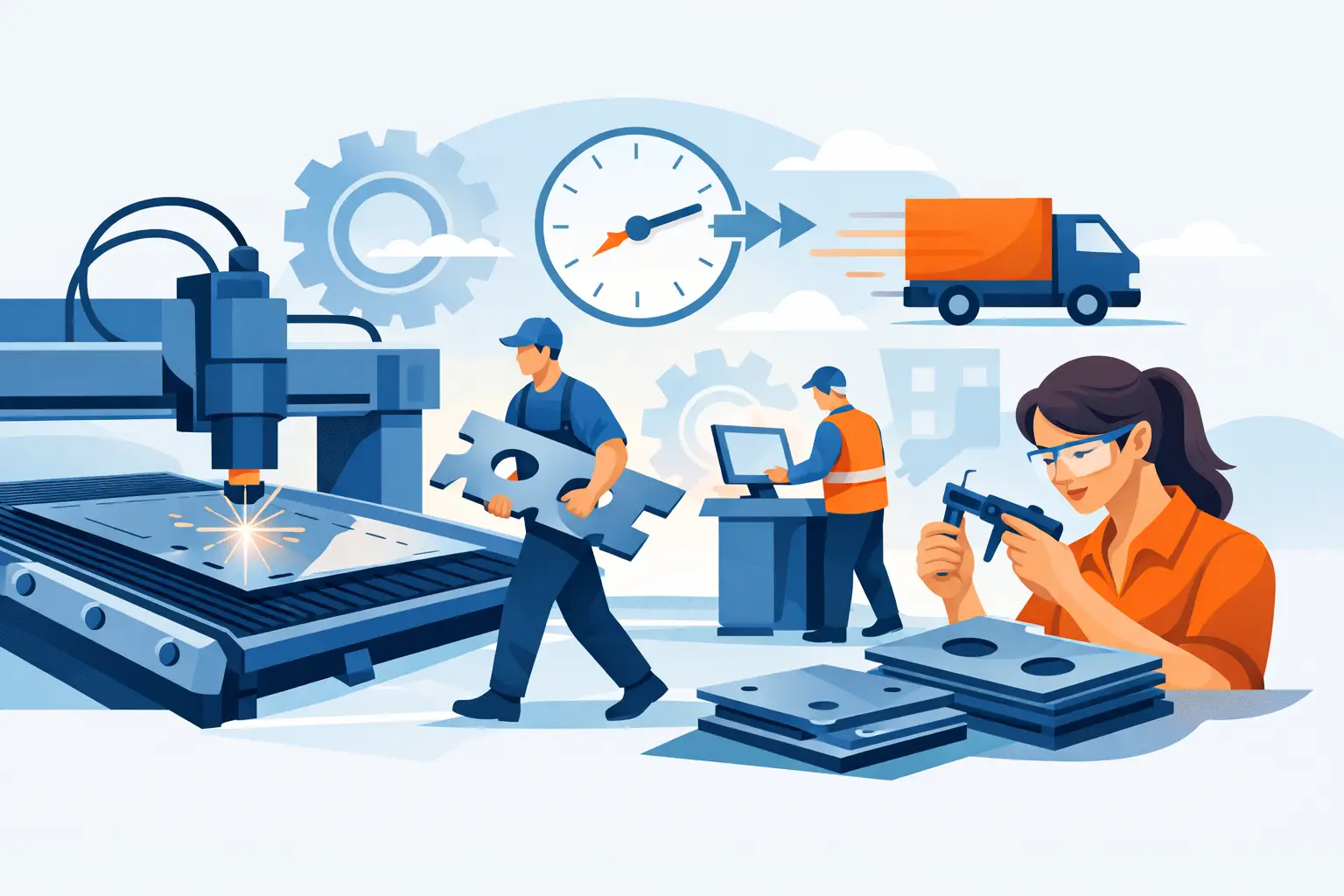
A fabrication job can stop for one missing bracket, panel or plate. The crew is ready, materials are on site and the next trade is booked, but a late-cut component holds up the entire sequence. A fast turnaround cutting service is not simply about receiving parts quickly. It is about receiving accurate, usable parts that fit the job, arrive when promised and do not create more work at the bench.
For Adelaide fabricators, builders, manufacturers and designers, the right cutting partner provides capacity when in-house equipment is busy, unsuitable for the material or unable to achieve the required detail. The best result comes from matching the cutting method, material and job urgency before production starts.
What a fast turnaround cutting service should deliver
Speed has limited value if the finished part is out of tolerance, heat-affected or difficult to weld, fold or assemble. A reliable service balances lead time with the details that protect the rest of your schedule: clear quoting, practical advice, correct material handling, accurate nesting and dependable dispatch.
That means asking the right questions at the beginning. Is the part made from mild steel, stainless steel, aluminium, foam or another material? Does it need a crisp profile for a decorative screen, a clean edge for visible stainless work, or a production-ready blank for further fabrication? Is the drawing complete, and are all dimensions, holes and internal radii practical for the selected process?
A cutting provider with both CNC laser and waterjet capability can make this decision based on the job rather than forcing every order through one machine. That flexibility matters when a deadline is tight. It reduces the risk of choosing a process that is quick at the machine but costly in rework afterwards.
Laser or waterjet: choose the process that protects the job
Laser cutting is often the efficient choice for many sheet-metal components, particularly where repeatable profiles and rapid production are required. It is well suited to steel, stainless steel and aluminium applications within the appropriate material and thickness range. For brackets, gussets, panels, machine parts and production batches, laser cutting can provide a clean, accurate result at speed.
However, laser is a thermal process. Heat can affect the edge of some materials and may be a consideration where distortion, finish or material properties are critical. Thin sheet can be particularly prone to movement if a design has narrow sections or extensive internal detail. The correct settings, nesting and process selection make a substantial difference, but the heat factor still needs to be considered.
Waterjet cutting uses a high-pressure stream of water, with abrasive added for harder materials, to cut without creating a heat-affected zone. At pressures up to 60,000 PSI, it can produce intricate shapes while preserving material integrity. This cold-cut process is especially valuable for thicker materials, heat-sensitive materials, specialised alloys and jobs where distortion is not acceptable.
Waterjet is also highly versatile. Alongside steel, stainless steel and aluminium, it can cut materials such as foam and many other products that are not suitable for laser cutting. There are trade-offs: depending on material, thickness and geometry, waterjet may take longer than laser. But where avoiding heat distortion prevents a rejected part, a difficult weld or hours of straightening, it is often the faster overall route.
The practical question is not “which machine is best?”
The practical question is which machine produces the best finished component for the required date. A simple laser-cut steel plate may be completed quickly and economically. A detailed aluminium component that must remain flat, or a thick stainless part with demanding edge requirements, may be better suited to waterjet. An experienced cutting team should explain that choice in plain language rather than treating every job as identical.
How to reduce lead time before cutting begins
Most avoidable delays occur before the first sheet is loaded. Clear information allows a cutter to assess the work quickly, confirm the process and move the order into production without repeated calls or drawing changes.
For a straightforward quotation and faster production release, provide these four essentials:
- A clear CAD file where available, preferably with dimensions and scale confirmed.
- Material type, thickness and whether material is supplied or required.
- Quantity, required date and whether parts need delivery or collection.
- Any critical requirements, such as visible edges, tight tolerances, bend allowances, grain direction or no-heat cutting.
A PDF is useful for checking the intended finished part, even where a DXF or other cutting file is supplied. If the drawing is a sketch, include all key dimensions and identify which measurements are critical. This is particularly important for components that must mate with existing work, such as replacement machine parts, site-installed brackets and folded assemblies.
It also pays to consider the full fabrication sequence. If a part will be folded after cutting, hole positions and cut-outs must allow for bends. If it will be welded, consider where tabs, slots or edge preparation may save time during fit-up. If it will be powder coated, painted or used in an architectural feature, tell the cutting provider which faces will remain visible. These details are small on a drawing but can have a major effect on the finished result.
Urgent work still needs a realistic production plan
A genuine urgent job deserves a direct answer, not a vague promise. Turnaround depends on material availability, thickness, quantity, design complexity, machine loading, programming requirements and delivery distance. A single simple part may be turned around far more quickly than a large batch of thick, highly detailed components, even if both are described as urgent.
The most effective approach is to state the hard deadline early. If parts are needed for a Friday installation, say so at quotation stage. The cutting team can then assess whether the material is available, whether laser or waterjet is the better option and when collection or delivery can realistically occur.
There can also be ways to protect the programme. For example, a priority batch of the first components needed for assembly may be cut ahead of the balance of the order. A design may be adjusted to use available material sizes more efficiently. Or an alternative material thickness may be discussed where it remains fit for purpose. These are project decisions, not shortcuts, and they should only be made with the customer’s approval.
Accuracy matters more when the clock is running
When deadlines are close, it is tempting to focus only on cutting speed. Yet inaccurate parts create the slowest outcome of all. An oversized hole, a missed internal cut-out or a distorted panel can hold up fabrication longer than a short wait for properly cut replacements.
CNC-controlled cutting provides repeatability across a batch, which is essential for parts that need to interchange or assemble consistently. Good file checking and material identification are equally important. Stainless steel and aluminium can look similar at a glance in a busy workshop, but they behave differently in use and must be handled accordingly.
Quality control should be practical and job-specific. Critical dimensions, hole locations, edge condition and part quantity should be checked against the approved drawing before dispatch. For architectural and custom work, it may also include confirming orientation, pattern layout and the visual appearance of the cut. This attention gives installers and fabricators confidence that the parts can go straight from delivery to the next operation.
Local service keeps communication and delivery practical
Working with a local Adelaide cutting partner makes it easier to resolve details quickly. A drawing can be discussed with someone who understands fabrication realities, material can be checked where necessary, and collection can be coordinated around workshop schedules. For jobs outside metropolitan Adelaide, dependable delivery planning is just as important, particularly when parts are required at a regional site or by a country fabricator.
Waterjet & Laser SA combines on-site CNC laser and waterjet cutting so customers can select the process that suits the application, not just the first available machine. That capability supports everything from production components and construction parts to intricate architectural patterns and custom designs.
The most useful fast turnaround cutting service is one that treats your deadline as part of the specification. Send clear information, identify the components that matter first and choose a provider that can balance speed with precision. When the parts arrive clean, accurate and ready for the next stage, the rest of the job keeps moving.