Author Archives: waterjetlaser

Waterjet Cutting Cost for Accurate Custom Parts

Waterjet Cutting Cost for Accurate Custom Parts

A waterjet cutting quote is not simply a price per metre of cut. A 10 mm stainless bracket with a few clean holes may take less machine time than a decorative screen panel with hundreds of fine internal details, even if both start from similar-sized sheets. Material, thickness, drawing quality, tolerances and quantity all affect the final figure.

For fabrication shops, builders, engineers and designers, understanding waterjet cutting cost makes it easier to specify parts correctly, compare processes fairly and avoid paying for preventable rework. The objective is not the cheapest cut at any cost. It is a finished part that fits, performs and arrives when your project needs it.

What makes up waterjet cutting cost?

Waterjet cutting uses a high-pressure stream of water – up to 60,000 PSI – combined with abrasive garnet for most hard materials. The process cuts without introducing heat into the workpiece. That means no heat-affected zone, no thermal distortion and no hardened edge that needs extra attention before welding or machining.

The cost of a job is generally driven by the time and resources required to convert a drawing and raw material into accurate, usable parts. The major factors are connected, so changing one part of the specification can affect several others.

Material type and thickness

Harder and thicker materials generally take longer to cut. Mild steel, stainless steel, aluminium, stone, tile and thick rubber each behave differently under the jet. Waterjet can process a remarkably broad range of materials, but the nozzle speed must suit the material to achieve the required edge finish and dimensional accuracy.

For example, a thicker stainless steel component will usually require a slower cutting speed than a thinner aluminium profile. Slower travel increases machine time and abrasive consumption. On the other hand, waterjet can be a sound value choice where heat would damage, discolour or distort the material, particularly for stainless, aluminium, laminated products, rubber and other heat-sensitive materials.

Material supply also matters. If you provide material, it must be suitable for cutting, flat enough to hold securely and sized to allow for clamping and efficient nesting. If material is supplied as part of the job, the quote needs to include sheet size, grade, thickness, availability and expected offcut.

Cutting length, detail and pierces

Machine time is influenced by more than the outside perimeter of a part. Every internal hole, slot, sharp corner and intricate pattern adds toolpath length. Each separate start point, known as a pierce, also takes time and uses consumables.

A simple gusset may have one external profile and two holes. A detailed architectural panel may have dozens or hundreds of internal shapes. Both are achievable, but they should not be expected to carry the same per-part cost.

Fine detail can also affect the practical minimum feature size. A narrow web or very small hole may be possible in one thickness but unsuitable in another. Discussing the purpose of the part early helps determine whether a feature should be retained, enlarged or cut with a different process.

Tolerance and edge-quality requirements

Waterjet is valued for precision cutting, but there is a difference between a standard production tolerance and a highly controlled fit for a mating component. Tighter tolerances may require slower cutting, additional checking or a revised approach to lead-ins and part support.

The same applies to edge quality. Faster cutting can be appropriate for some fabrication blanks, while visible architectural work or parts that need a clean assembly fit may justify a finer finish. Neither option is automatically better. The right choice depends on what happens to the part after cutting.

If an edge will be welded, painted, machined or concealed, specify that. If it will remain visible in a finished screen, benchtop insert or feature panel, say so. Clear requirements allow the cutting method to match the end use rather than adding cost where it delivers no practical benefit.

Setup costs and why quantity changes the price

Every project has an initial preparation stage. Drawings need to be checked, parts nested efficiently on the available material, machine settings selected and the job prepared for cutting. This setup time is much the same whether a job contains one prototype or fifty identical parts.

That is why one-off custom parts can have a higher per-part price than a repeat production run. As quantity increases, setup is spread across more components and nesting can often reduce material waste. Repeated parts may also be arranged to minimise cutting travel and make more effective use of a full sheet.

Quantity does not always mean that a large run is the best buying decision. If a design is still being tested, ordering a small first run may save money by identifying fit-up issues before a larger batch is cut. For established designs with predictable demand, a larger quantity can offer stronger value.

Waterjet cutting cost versus laser cutting

Waterjet and laser cutting are both precise CNC processes, but they are not interchangeable. Selecting the right one is one of the most effective ways to control project cost.

Laser cutting is often the faster and more economical option for suitable thinner metals, especially when producing larger quantities of steel, stainless steel or aluminium parts. Its speed can make a substantial difference on work with long cutting lengths or many repetitive profiles.

Waterjet is often preferred when a cold-cut process is required, when material thickness or composition does not suit laser, or when cutting non-metal materials such as rubber, foam, timber, tile and stone. It is also valuable when avoiding heat distortion is critical. A warped or heat-marked part that needs straightening, refinishing or replacing is not a low-cost outcome.

At Waterjet & Laser SA, having both CNC waterjet and laser cutting available onsite helps put the process decision in context. The best option depends on the material, thickness, finish required, quantity and lead time – not on forcing every job through one machine.

How to get a more accurate quote

A clear enquiry reduces back-and-forth and allows the cutter to quote the work against the actual requirement. Supply a dimensioned drawing wherever possible, ideally in a suitable CAD format, and identify material grade, thickness and whether you are supplying it or need it sourced.

It also helps to state the number of parts required, whether the job is a prototype or repeat order, and the date the parts are needed. Include any critical dimensions, visible faces, special edge expectations and downstream processes such as folding, welding, powder coating or machining.

For complex work, a few additional details can prevent expensive assumptions:

  • Confirm whether parts need to remain in the sheet for collection or can be fully separated.
  • Identify the face that must be kept scratch-free or visually clean.
  • Provide a physical sample when matching an existing component or irregular material.
  • Flag any dimensions that are essential to assembly, rather than applying tight tolerances to every feature.

Good drawings save time, but they do not need to be perfect before you ask for advice. A sketch, photo or concept file can be enough to start a practical discussion about manufacturability, material selection and the most cost-effective process.

Ways to reduce cost without compromising the part

The strongest cost savings usually come from design decisions made before cutting begins. Simplifying a pattern, reducing unnecessary pierces or standardising hole sizes can shorten cutting time while preserving the component’s function. Where possible, avoid tiny internal corners that do not add value to the finished part.

Consider the stock material size as well. A small adjustment to part dimensions or orientation can improve nesting and reduce the amount of material that becomes offcut. This is particularly relevant for premium stainless, aluminium and decorative materials, where waste has a direct effect on the job cost.

Be careful not to simplify the wrong feature. A bracket with a poorly placed slot, a screen with insufficient support webs or a tile cut without adequate clearance can create bigger problems during installation. The sensible approach is to remove complexity that is not functional, while protecting the details that make the part fit and perform.

Lead time can also influence the best production plan. Allowing reasonable time for material sourcing, programming and scheduling provides more flexibility than a last-minute request. Urgent work can often be accommodated, but planned work usually gives more options for efficient scheduling and delivery across Adelaide, regional South Australia and beyond.

The value behind the quoted figure

A waterjet cutting quote should be judged against the complete cost of getting a usable part into your job. That includes accuracy, edge condition, material integrity, turnaround and the likelihood of the part fitting first time. A low initial price loses its appeal quickly if the component arrives late, needs hand-finishing or cannot be used.

For one-off components, production parts and intricate custom designs, the most useful first step is to share the drawing and explain where the part is going. A capable cutting partner can then help balance speed, finish and waterjet cutting cost before material is committed and workshop time is lost.

Steel Plate Profiling for Accurate Fabrication

Steel Plate Profiling for Accurate Fabrication

A bracket that is 2 mm out, a hole that needs reworking, or a plate edge distorted by excess heat can hold up an entire fabrication job. Steel plate profiling is the process that turns raw sheet or plate into accurate, repeatable parts ready for folding, welding, machining or installation. When it is specified properly, it reduces workshop handling, protects material quality and keeps the job moving.

For fabricators, builders, engineers and project managers, the requirement is rarely just to cut steel to shape. The part must suit its purpose, arrive when promised and fit with the rest of the assembly. That calls for the right cutting process, clear production information and a supplier that understands the practical consequences of a poor cut.

What steel plate profiling actually involves

Steel plate profiling uses CNC-controlled equipment to cut a programmed shape from steel plate. That shape may be a simple base plate with bolt holes, a run of gussets, flanges and cleats, or a detailed component with internal cut-outs, slots and tight radii. A digital drawing guides the cutting head, giving far greater repeatability than manual marking and cutting.

The value lies in more than dimensional accuracy. Quality profiling considers kerf width, hole size, edge condition, heat input, nesting and the order in which features are cut. These details affect whether a part stays flat, whether holes remain usable without drilling, and how much finishing is needed before fabrication begins.

For one-off work, profiling makes custom components practical without the time spent manually laying out each plate. For production runs, it gives consistency from the first part to the last. It can also improve material yield by nesting parts efficiently across a sheet, reducing offcuts and unnecessary steel costs.

Choosing the right process for steel plate profiling

Laser cutting and waterjet cutting can both produce high-quality steel parts, but they do not deliver the same result in every application. The right choice depends on plate thickness, design detail, required edge condition, tolerance, quantity and the work that follows.

Laser cutting for speed and clean production parts

High definition CNC laser cutting is often the efficient choice for thinner steel plate and repeat production work. It is fast, accurate and well suited to parts with holes, slots, tabs and detailed profiles. For many fabrication components, laser-cut parts arrive with a clean edge that can move directly to the next operation.

Because laser cutting uses heat, it produces a heat-affected zone at the cut edge. In suitable material thicknesses and correctly managed cutting conditions, this is generally small and acceptable for a wide range of fabrication work. However, it can matter where a component is particularly sensitive to heat, where distortion must be minimised, or where edge metallurgy is critical to the application.

Laser cutting is commonly a strong option where turnaround, repeatability and competitive pricing are priorities. It is particularly effective when several parts can be nested efficiently and cut in a single production run.

Waterjet cutting where heat cannot be tolerated

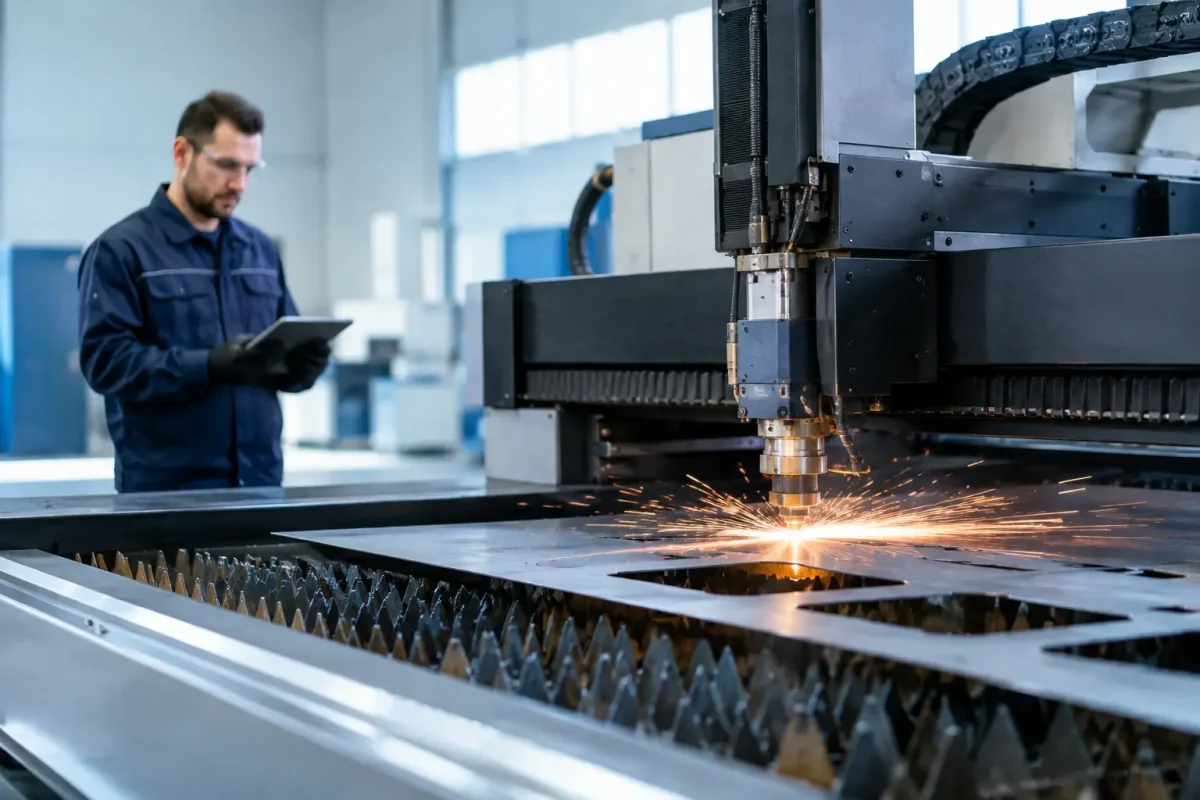
Waterjet cutting uses a high-pressure stream of water, typically up to 60,000 PSI, combined with abrasive material to cut through steel plate. It is a cold-cut process, meaning it does not create a heat-affected zone or heat distortion in the workpiece.

That makes waterjet a practical choice for thicker material, heat-sensitive work and parts requiring close attention to material integrity. It can cut complex shapes, narrow slots and internal profiles without changing the properties of the surrounding steel. The process is also valuable when a job includes several material types, such as steel alongside stainless steel, aluminium, rubber or gasket material.

The trade-off is speed. Waterjet cutting can take longer than laser cutting, especially on production quantities where laser is well matched to the plate thickness. Yet where avoiding heat damage eliminates straightening, machining or rejected parts, waterjet can be the more economical choice overall.

Drawings and details that prevent delays

Accurate cutting begins before the plate reaches the machine. A clear file and a few job-specific details allow the cutter to select the correct process, quote accurately and plan the work without avoidable back-and-forth.

For most steel plate profiling jobs, provide:

  • a dimensioned PDF, DXF, DWG or other suitable CAD file;
  • the steel grade and plate thickness;
  • required quantity and whether the work is a one-off or repeat order;
  • critical dimensions, tolerances and hole requirements; and
  • any downstream processes, such as folding, welding, machining, galvanising or powder coating.

Not every dimension needs an exceptionally tight tolerance. Applying tight tolerances across a whole part can add cost without improving the final assembly. It is usually better to identify the dimensions that locate the component or affect fit-up, then allow standard cutting tolerances elsewhere.

Hole size deserves similar attention. Very small holes relative to plate thickness can be challenging with any cutting method, and their finish may not suit every fastening or tapping requirement. If holes will be threaded, reamed or machined after profiling, say so early. A small allowance or pilot-hole approach may be the better production decision.

The same applies to cut edges. A welded bracket may only need a clean profile ready for fit-up, while an exposed architectural component may require a more refined edge and careful handling to protect its visible face. The intended use should guide the process, rather than assuming every part needs the same finish.

Profiling decisions that affect fabrication quality

A profile can be perfectly cut and still create issues if it has not been designed for fabrication. Sharp internal corners, for example, are difficult for many cutting processes to achieve exactly as drawn because cutting tools have a kerf or stream width. Adding an appropriate internal radius can improve accuracy and reduce stress concentration in the finished part.

Tabs and slots can make assembly quicker, particularly for frames, enclosures and repeated fabricated items. They help locate components before welding and reduce measuring time on the workshop floor. Their dimensions must account for material thickness, cutting tolerance and any coating or finish applied later.

For plate that will be folded, bend allowances and relief details need to be included in the drawing. Profiling can prepare the part precisely, but it cannot compensate for bend data that has not considered the material, tooling and final angle. Early coordination between the designer, cutter and fabricator saves rework when the part reaches the press brake.

Nesting also matters. Parts can often be arranged to reduce waste, but the most efficient layout is not always the best commercial outcome. A job requiring urgent delivery may favour speed over maximum sheet utilisation, while a larger production run may justify more detailed nesting to lower the material cost per part. Good service means discussing that balance rather than treating every order the same way.

Why local cutting capacity matters

When a project is waiting on steel parts, delays are not confined to the cutting stage. They affect welding schedules, site installation, freight and labour allocation. Access to both laser and waterjet cutting in one Adelaide facility gives customers a practical advantage: the process can be selected around the job rather than forcing every part through the same machine.

For South Australian fabricators and project teams, local communication also makes it easier to resolve drawing questions, adjust quantities or arrange collection and delivery. Waterjet & Laser SA supports work ranging from straightforward production components to intricate custom profiles, with the same focus on accurate parts and dependable turnaround.

The best next step is to review the plate profile in the context of the finished job. Share the drawing, material details and required date, then ask which process will give the right edge quality and accuracy without paying for specifications the part does not need. That conversation is often where a cutting order becomes a smoother fabrication job.

Laser Cutting Reviews That Help You Choose Well

Laser Cutting Reviews That Help You Choose Well

A five-star rating is reassuring, but it will not tell you whether a laser-cut bracket arrived flat, whether holes were cut to the required tolerance, or whether the supplier answered a material question before production began. Useful laser cutting reviews go beyond general praise. They show how a cutting provider performs when timing is tight, drawings are detailed and the finished parts must fit first time.

For fabricators, builders, engineers and designers, choosing a cutting partner is not simply a price decision. A poor cut can create rework, hold up welding, waste costly sheet or delay an installation. Reviews are one part of due diligence, but they need to be read with the same practical judgement applied to a drawing or material specification.

What laser cutting reviews should actually tell you

The most useful feedback is specific. Look for comments about accuracy, edge quality, communication, turnaround and delivery. A review saying a job was completed “quickly and professionally” is positive, but a review explaining that parts were cut accurately from supplied DXF files, packed carefully and ready for fabrication gives far more confidence.

Pay close attention to whether the reviewer had a project similar to yours. A decorative screen project may demonstrate detail and visual finish. A batch of steel machine components can indicate repeatability, nesting efficiency and reliable production scheduling. Neither is automatically more valuable than the other. The relevant question is whether the supplier has handled the type of material, thickness and finish your work requires.

Reviews can also reveal how a business responds when a job is less straightforward. Material availability changes, drawings may need clarification and urgent jobs occasionally arise. A supplier does not need to promise the impossible. What matters is clear advice, realistic lead times and early communication when a production issue could affect the job.

Read beyond the star rating

A high average score is a useful starting point, not a technical qualification. Consider the number of reviews, how recent they are and whether the comments contain genuine project detail. A business with consistent feedback over time generally provides a better indication of day-to-day service than one or two broad endorsements.

It is also worth looking at how the supplier responds to feedback. A measured response to a concern can show accountability and a willingness to resolve issues. In cutting and fabrication support, that matters. Projects often involve several trades, fixed site dates and materials that cannot simply be replaced overnight.

Be wary of reviews that make blanket claims without describing the result. “Best laser cutting ever” may be sincere, but it does not answer the questions that affect your order. Did the parts match the file? Was the heat-affected edge acceptable for the intended finish? Were pieces labelled, sorted or delivered as agreed? Specific outcomes are more useful than superlatives.

Match the review to the cutting process

Laser cutting is an efficient choice for many sheet metal jobs, particularly where speed, clean detail and repeatable profiles are required. It is commonly suited to steel, stainless steel and aluminium, depending on thickness, grade and the required edge condition. However, laser is not the right process for every material or every design.

This is where a supplier with more than one cutting capability can provide a practical advantage. Waterjet cutting uses a high-pressure stream of water, with abrasive added for harder materials, to cut without introducing a heat-affected zone. At pressures up to 60,000 PSI, it can accurately process materials that are unsuitable for laser cutting or where preserving the material’s properties is critical.

When reading reviews, notice whether customers mention advice on process selection. A provider that recommends waterjet for a thick aluminium component, rubber gasket, tile, timber or heat-sensitive part may be solving the actual production problem rather than pushing every job through one machine. Conversely, laser can be the more economical and faster option for suitable metal sheet work. The best choice depends on the drawing, material and finished-use requirement.

Questions to ask before placing an order

Reviews should guide your first conversation, not replace it. Send a clear drawing or DXF file where possible, along with material type, thickness, quantities and any critical dimensions. If the part will be folded, welded, powder coated, polished or installed against another component, say so. Those details affect how the job should be prepared and what edge quality is appropriate.

Ask about lead time in relation to your required delivery date, rather than asking only whether a job is “urgent”. A capable supplier can usually give more useful guidance when they understand the quantity, material and complexity involved. For repeat work, ask how files are retained, how revisions are controlled and whether batches can be scheduled around your production needs.

It is also sensible to clarify whether the quoted price covers material supply, cutting, programming, handling, delivery and GST. The lowest initial figure is not always the lowest project cost if it leaves you managing missing material, unsuitable cut quality or a second round of corrections.

For larger or high-value jobs, consider starting with a first-off part or small batch. This provides an opportunity to confirm fit, edge finish and assembly requirements before full production proceeds. It is a straightforward step that can prevent avoidable waste on complex fabrication work.

Signs of a dependable local cutting partner

Good reviews often point to the operational habits behind good results. Reliable providers ask questions when information is unclear. They inspect material and finished parts appropriately, manage files carefully and avoid promising a turnaround they cannot meet. They also understand that cutting is only one stage of the customer’s job.

For Adelaide and South Australian businesses, local capability can reduce freight time and make it easier to discuss samples, materials or changes directly. It can be particularly valuable where a fabrication shop needs replacement parts quickly or a builder is coordinating a site deadline. Delivery coverage remains useful for regional projects, but direct access to the people producing the work adds confidence when requirements are detailed.

Waterjet & Laser SA combines onsite CNC laser and waterjet cutting so customers can select a process based on the part, not a one-size-fits-all machine limitation. That flexibility matters for work ranging from accurate metal components to intricate architectural pieces, gaskets, tiles and specialised materials.

The review detail that matters after delivery

The real test of a cutting service happens when the parts reach your workshop or site. They should be identifiable, protected from damage in transit and supplied in a condition that supports the next operation. If a job involves multiple components, sorting and clear communication can save valuable time on the floor.

After the job, consider leaving feedback that helps the next customer make a better decision. Mention the material, general application, communication, turnaround and whether the parts performed as expected. Constructive detail is more valuable to other buyers than a star rating alone, and it gives a quality-focused supplier useful information to maintain or improve their service.

The best cutting partner is rarely the one with the loudest claims. It is the one whose reviews, technical advice and finished parts all tell the same story: accurate work, practical service and a process chosen to suit the job in front of you.

Laser Cut Screens in Adelaide Built to Last

Laser Cut Screens in Adelaide Built to Last

A decorative screen has to do more than look good on installation day. In Adelaide, it may need to handle summer heat, coastal air, prevailing winds and the everyday knocks of a busy commercial or residential setting. Well-designed laser cut screens in Adelaide can provide privacy, filtered light, shade and a strong architectural feature – provided the material, pattern, finish and fixing method suit the job.

For builders, fabricators, designers and property owners, the value is in getting a custom result without compromising on fit, durability or lead time. The difference between a screen that performs for years and one that creates problems often comes down to decisions made before the first sheet is cut.

What laser cut screens can do for a project

Laser-cut screens are flat panels cut from sheet metal into repeating patterns, detailed artwork, branding, geometric forms or practical openings. They are used as boundary screens, gates, balustrade infill, pergola features, façade elements, privacy panels, room dividers and signage. A simple pattern can soften a hard fence line. A more detailed design can become the focal point of an entry, courtyard or hospitality fit-out.

Their practical role matters just as much as their appearance. A screen can reduce direct sightlines into a yard without blocking all airflow. It can create shade around an outdoor dining area while allowing light to move across the space. On commercial sites, it can hide plant equipment, define zones or carry a brand element in a durable material.

The right balance depends on the opening percentage of the design. More open area lets through more light and air, but reduces privacy and can make the panel feel less substantial. Tighter patterns provide stronger screening but may catch more wind or create a darker enclosed space. There is no universal best pattern – the location and purpose should lead the design.

Choosing material for Adelaide conditions

Material selection should be made early, not after a pattern has been approved. Different metals cut and finish well, but they suit different environments, budgets and visual outcomes.

Mild steel is often selected where a painted finish is planned. It is cost-effective, strong and suitable for many architectural screens when correctly prepared, coated and maintained. Any exposed cut edges and fixing points need proper protection, particularly where water can sit against the panel.

Aluminium is light, corrosion resistant and a practical option for large panels, gates and installations where weight affects the supporting frame. It is well suited to powder coating and is easier to handle during installation. Its lighter construction can be an advantage, although panel thickness and frame design still need to account for wind loads.

Stainless steel offers excellent corrosion resistance and a refined finish, making it a strong choice for coastal properties, public spaces and applications where the metal will remain visible. It generally carries a higher material cost, but that can be justified where longevity and low maintenance are priorities.

Corten-style weathering steel is chosen for its earthy, evolving surface. It can work beautifully in landscape and architectural projects, but it needs careful planning. During the weathering phase, runoff can stain paving, render and nearby surfaces. It is not simply a fit-and-forget finish.

Pattern design is also engineering

The detail possible with laser cutting creates plenty of design freedom, but not every drawing is ready to manufacture. Fine bridges, very tight internal corners, narrow sections and small loose pieces can affect how a screen cuts, handles and performs over time.

A good production review checks whether the pattern has enough material connecting each part of the design. This is especially important with detailed leaves, lettering, lace-style work and custom artwork. Thin unsupported sections may distort during handling or become vulnerable once installed.

Panel size also affects the design. A pattern that looks balanced on a small sample may need adjustment across a two-metre-wide screen. Repeating elements, borders and join lines should be considered as part of the complete installation, rather than treating each panel as an isolated piece.

For functional screens, it is worth discussing privacy angles as well. A direct front view may appear private, while an elevated neighbouring window or side approach reveals more than expected. A mock-up, scaled drawing or site measurement can prevent a costly surprise.

Precision cutting affects the finished result

Clean, accurate cutting makes fabrication easier and helps panels sit correctly in their frames. It matters when screens include multiple panels, integrated fixing holes, gate hardware clearances or patterns that need to align across a run.

CNC laser cutting is particularly effective for metal screens with intricate, repeatable detail. It offers speed and accuracy for suitable materials and thicknesses, producing clean profiles that are ready for the next fabrication stage. The final edge appearance can vary according to material, thickness, cut settings and the planned finish, so it is sensible to discuss expectations before production.

Some projects are better suited to waterjet cutting. Waterjet uses a cold-cut process at pressures up to 60,000 PSI, so it avoids heat-affected zones and heat distortion. This can be valuable for materials or design requirements where preserving material integrity is critical. Having both processes available allows the cutting method to be selected for the actual job, rather than forcing every design through one machine.

Waterjet & Laser SA provides both onsite CNC laser and waterjet cutting from Lonsdale, supporting Adelaide fabricators, builders and custom design projects with accurate, production-ready parts.

Don’t leave fixing and finishing until last

A screen is only as reliable as its support system. Before cutting begins, confirm whether panels will be welded into a frame, fixed with visible bolts, mounted with concealed brackets or installed as sliding or hinged gates. Each option changes the allowance needed around edges, holes and clearances.

Large panels may require returns, intermediate rails or a heavier frame to stay flat. In exposed locations, wind loading deserves serious attention. A decorative perforated panel still presents a surface to the wind, and its fixing system must be designed accordingly. This is a job for the relevant builder, engineer or installer where structural requirements apply.

Finishing should also suit the material and setting. Powder coating offers a broad range of colours and a durable architectural finish when the preparation process is correct. Painted steel may need periodic inspection and touch-ups, especially around cut edges and fasteners. Stainless steel can be brushed, polished or left with a more industrial appearance, depending on the project.

If the panel will be powder coated after cutting, include all holes, slots and cut-outs in the final file. Drilling or modifying coated panels later can damage the finish and introduce avoidable corrosion risks.

Information that speeds up quoting and production

The best screen projects start with clear information. A dimensioned drawing is ideal, but a sketch with key measurements can be enough to begin a conversation. Include the material preference, thickness if known, number of panels, intended finish and whether the panels need folds, frames or additional fabrication.

For custom patterns, supply the cleanest artwork available. Vector files are generally preferred because the cut paths can be checked accurately. Raster images can often be redrawn, but that adds time and may require choices about the level of detail to retain.

It also helps to state the application upfront: a courtyard privacy screen has different requirements from a laser-cut logo panel, a gate insert or a façade feature. Lead times can depend on material availability, design complexity, nesting efficiency, finishing and the number of parts required. Early confirmation keeps installation schedules realistic and reduces last-minute changes.

A screen should look intentional from every angle

The strongest results come from treating the screen as part of the whole build. Consider the view from inside and outside, day and night, close up and across the street. Think about the frame colour, nearby cladding, planting, lighting and where rainwater will drain. A pattern that is subtle in full sun may cast striking shadows after dark when lit from behind.

That level of planning does not need to make the project complicated. It simply ensures the material, cut detail and installation method are working together. Start with how the screen needs to perform, then choose a design that earns its place in the space for years to come.

Waterjet Versus Laser Cutting for Your Job

Waterjet Versus Laser Cutting for Your Job

A sheet of stainless may look straightforward on the drawing, but the wrong cutting process can leave you with heat marks, a distorted edge, extra finishing work or a part that does not fit when it reaches site. For Adelaide fabricators, builders, manufacturers and designers, the waterjet versus laser cutting decision is not about choosing one technology as universally better. It is about matching the process to the material, thickness, tolerance, finish and timeframe of the job.

Both processes deliver highly accurate profiles and intricate detail. Both can turn CAD files into repeatable parts without the cost of setting up dedicated tooling. Their strengths are different, however, and those differences matter when a project is moving from concept to fabrication.

How each cutting process works

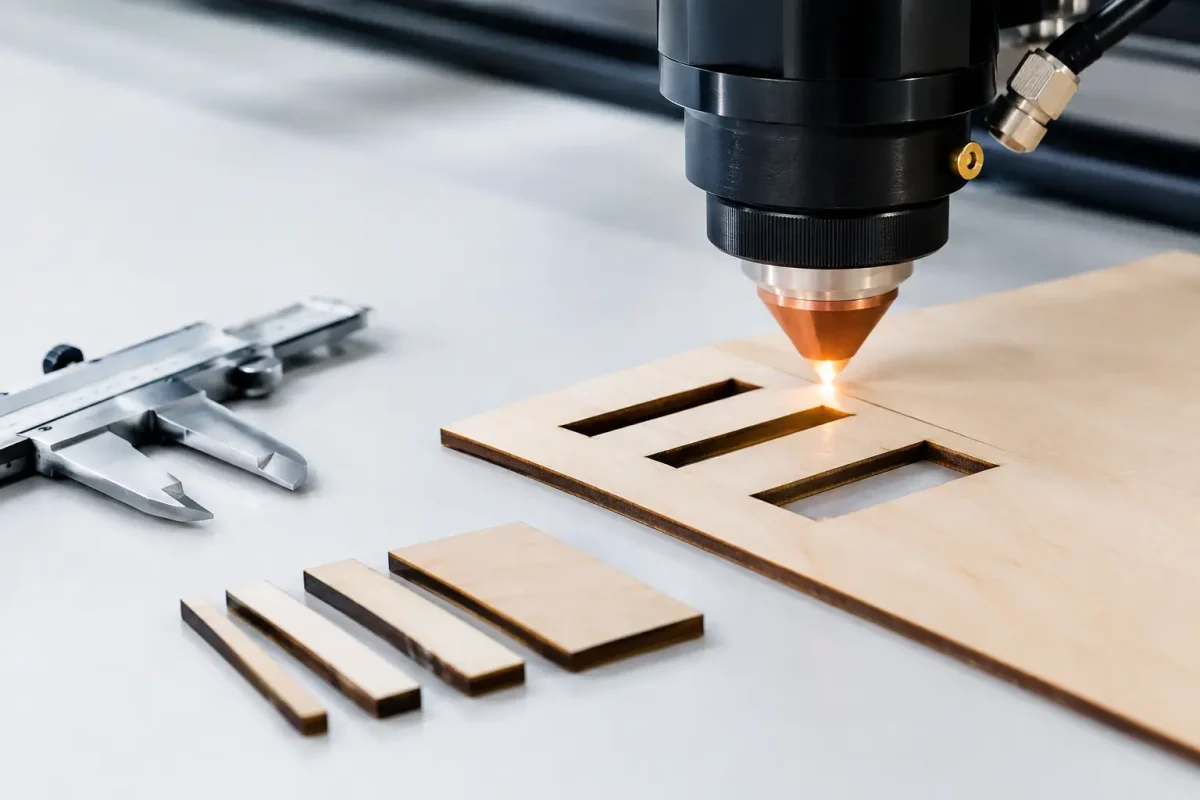
Laser cutting uses a concentrated beam of light to heat, melt or vaporise material along the programmed cutting path. An assist gas clears the cut as the CNC machine moves. It is a fast, efficient process for many metal applications, particularly thinner sheet where speed and fine detail are required.

Waterjet cutting uses a high-pressure stream of water – up to 60,000 PSI – mixed with abrasive garnet when cutting hard materials. The stream erodes the material rather than heating it. This cold-cut process is the defining advantage of waterjet: it produces no heat-affected zone and does not change the material properties adjacent to the cut.

The practical question is not simply whether a laser or waterjet can cut the part. It is whether the finished part will perform as intended, arrive when needed and require the least downstream work.

Waterjet versus laser cutting: the differences that matter

Heat and material integrity

Laser cutting introduces heat. On suitable materials and thicknesses, this is entirely manageable and is often the reason laser is so productive. Yet heat can create a heat-affected zone, especially around certain alloys, thicker sections or parts with narrow features. Depending on the material and application, that may result in slight edge hardening, discolouration or local distortion.

Waterjet cutting remains cold throughout the process. There is no thermal stress, no burning and no heat distortion. This is particularly valuable for stainless steel, aluminium and components that must retain their original properties after cutting. It is also the preferred option for heat-sensitive materials such as foam, rubber, plastics, stone, glass and many composites.

If you are cutting a bracket that will be welded and finished later, a laser-cut edge may be ideal. If you are cutting a precision aluminium component, a thick stainless part or a material that cannot tolerate heat, waterjet provides greater confidence in the finished condition.

Material range

Laser cutting is an excellent choice for steel, stainless steel and aluminium within appropriate thickness ranges. It is widely used for sheet-metal components, architectural features, panels, brackets and production parts where speed is a priority.

Waterjet has a broader material range. It can cut conductive and non-conductive materials alike, including metals, foam, rubber, ceramics, stone, glass and composite products. It can also cut mixed-material assemblies that would be difficult or unsuitable for laser processing.

That versatility can simplify a project with several materials. Rather than redesigning around the limitations of one process, waterjet allows intricate shapes to be cut from materials that are otherwise challenging to machine or fabricate.

Thickness and cutting speed

For thin sheet metal, laser cutting is generally faster. When a job involves a high quantity of relatively thin steel or stainless parts, laser can provide an efficient turnaround and a clean, accurate result. This makes it a strong choice for production runs, simple profiles and sheet-metal work that needs to move quickly into folding, welding or assembly.

As material thickness increases, the comparison changes. Waterjet can cut very thick material while maintaining a quality edge and avoiding heat effects. It may take longer than laser in some applications, but it can remove the need for secondary machining, stress relief or repair work caused by thermal distortion.

Speed should therefore be assessed across the whole job, not only by minutes on the cutting table. A faster cut is not always the lower-cost outcome if the parts need significant clean-up before fabrication or installation.

Edge quality and finishing

Both laser and waterjet can produce high-quality edges when the machine settings, material and design are properly matched. Laser-cut edges are typically clean and narrow, with a small kerf that supports detailed patterns and tight nesting. On some materials, there may be minor oxide or heat tint that requires attention where appearance, coating adhesion or welding quality is critical.

Waterjet leaves a smooth, satin-like cut edge with no heat tint and no burr created by melting. Cut quality can be adjusted according to the required finish and budget. A faster cut may show fine striations, while a slower, higher-quality setting produces a more refined edge for visible or precision work.

For decorative screens, signage, architectural details and exposed stainless components, the desired visual finish should be discussed before cutting begins. A drawing can specify dimensions, but it does not always communicate how the finished edge needs to look in its final setting.

Precision and intricate detail

CNC laser and CNC waterjet machines are both capable of precise, repeatable cutting from digital files. Fine internal cut-outs, curves, slots, holes and complex profiles are possible with either process. The most suitable option depends on the feature size, material thickness and acceptable tolerance.

Laser is particularly effective for intricate detail in thin sheet, where its narrow kerf supports close spacing and sharp features. Waterjet also handles complex profiles exceptionally well, including thick material and designs where heat could damage small bridges or narrow sections.

A useful rule is to consider the smallest feature on the part, not only the outside profile. Tiny holes, tight internal corners and narrow webs may influence the best process, the cutting direction and the final cost. An experienced cutting provider will review these details before production rather than discovering the issue after the material is on the machine.

Choosing the right process for common jobs

Laser cutting is often the practical choice for thin steel, stainless steel or aluminium parts that need a rapid turnaround. Think brackets, plates, gussets, folded components, sheet-metal panels and repeat production work. It gives fabricators an efficient starting point for the next stage of manufacture.

Waterjet is often the better choice for thicker materials, heat-sensitive alloys, mixed materials and components that require no heat-affected zone. It is also well suited to high-value materials where preserving integrity and avoiding distortion is more important than achieving the fastest possible cycle time.

For a custom architectural project, the decision may be less obvious. A laser may be ideal for a large run of thin decorative steel screens. Waterjet may be preferred for a detailed aluminium feature, a stone inlay or a component that combines materials. The design intent, installation environment and finish requirements should lead the process selection.

The information that helps get an accurate quote

The quickest path to the right recommendation is a clear drawing and a short explanation of how the part will be used. DXF, DWG and other suitable CAD files allow profiles to be assessed accurately, while a PDF is useful for dimensions, quantities and notes.

Material type, thickness, quantity and required delivery date are equally important. If the part will be bent, welded, powder coated, polished or installed as a visible feature, say so early. These details affect whether laser or waterjet is the more suitable process and whether allowances are needed in the design.

It is also worth raising any critical dimensions, mating parts or tolerance requirements before production. A part can be accurately cut to the supplied file, but the best fabrication outcome comes from checking that the file reflects the real assembly conditions.

Local capability makes the choice easier

When laser and waterjet capability are available onsite, the process can be selected around the job rather than around the limits of a single machine. That gives South Australian customers more flexibility for one-off components, ongoing fabrication work and custom designs with demanding material requirements.

Waterjet & Laser SA brings both technologies together with practical fabrication knowledge built over decades of working with steel, stainless steel and aluminium. The aim is straightforward: accurate parts, suitable edge quality, competitive pricing and dependable turnaround for Adelaide and regional projects.

The best cutting method is the one that leaves you with a part ready for its next job – whether that is welding in the workshop, fitting on site or becoming the feature that makes a design work.

Secret Link