
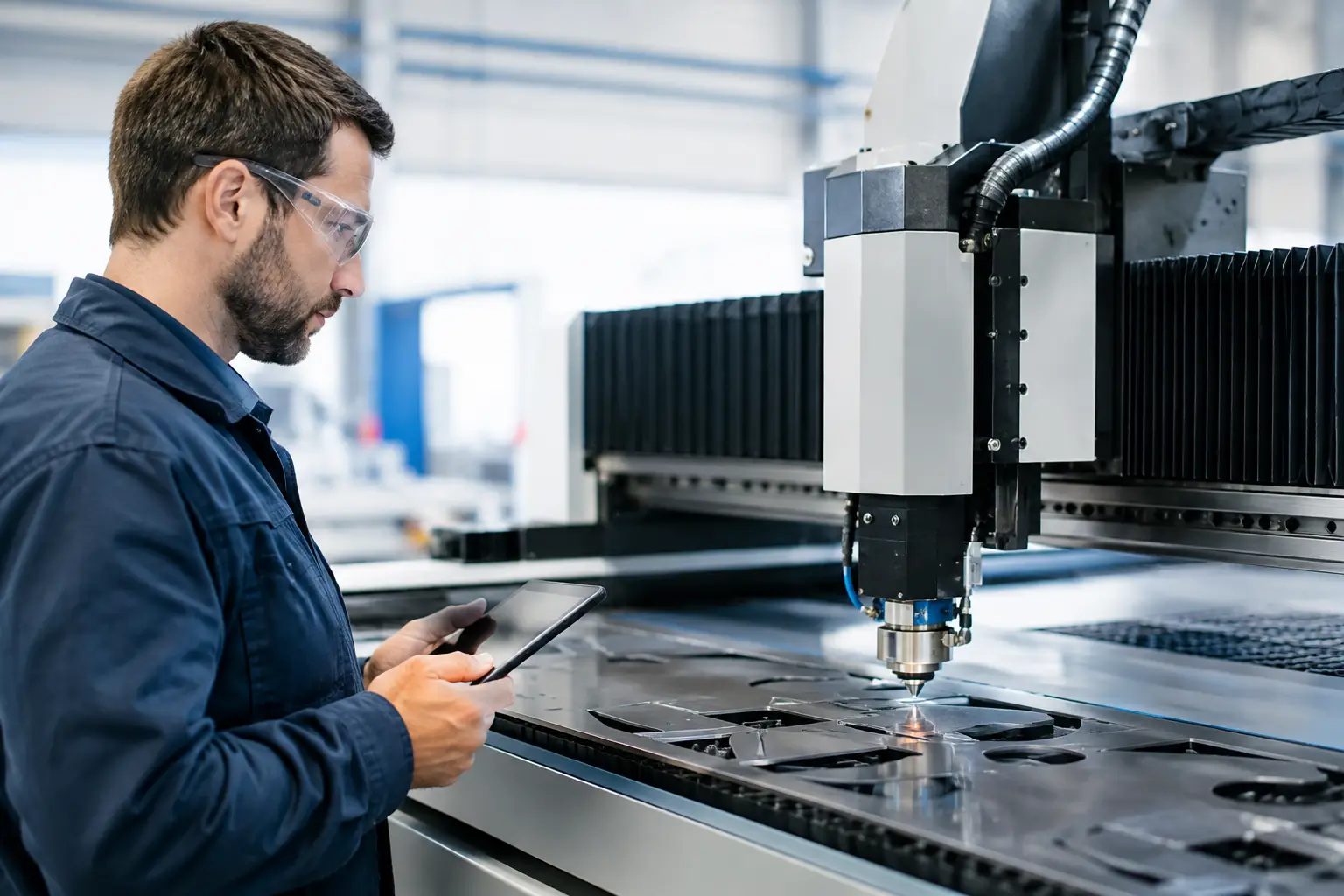
A fabrication job can stall over one missing bracket, a run of inaccurate profiles or material that has distorted during cutting. Outsourced CNC cutting gives businesses a practical way to keep work moving without taking on the cost, maintenance and operator requirements of running specialist equipment in-house. For Adelaide fabricators, builders, manufacturers and designers, the value is not simply access to a machine. It is access to the right process, dependable capacity and parts ready for the next stage of production.
When outsourced CNC cutting is the better option
Buying CNC cutting equipment can make sense for businesses with a consistent, high-volume workload in a narrow range of materials. But the real investment is much larger than the machine itself. There is programming, consumables, maintenance, extraction or abrasive handling, training, floor space and the cost of downtime when a critical component fails.
Outsourcing is often the stronger option when demand changes from week to week, when a job requires materials outside your usual capability, or when your own workshop is already at capacity. It allows a business to take on work with confidence without tying up capital in equipment that may sit idle between projects.
This is particularly useful for fabrication shops balancing urgent repair work with scheduled production. Rather than delaying a customer job while profiles are cut manually, a contractor can send through a drawing and receive accurately cut parts that are ready to fold, weld, machine, assemble or install. The same approach suits architectural metalwork, signage, automotive components, mining repairs, gaskets, flooring details and one-off custom designs.
Outsourcing also reduces the risk of choosing a process that does not suit the material. A clean cut in thin stainless steel may call for laser cutting, while a thick aluminium plate, rubber gasket or tile detail may be better suited to waterjet. Having both capabilities available from one supplier removes unnecessary compromise.
Outsourced CNC cutting is about process selection
CNC cutting is not one service with one result. The cutting method affects edge quality, speed, heat input, material condition and overall cost. A supplier that understands the differences can help you make a practical choice before material is loaded onto the machine.
When laser cutting is the efficient choice
High-definition CNC laser cutting is generally a fast and accurate option for many metal profiles, particularly sheet steel, stainless steel and aluminium. It is well suited to production runs, repeatable parts and detailed profiles where fast processing matters. Clean edges can reduce finishing time and help fabrication teams move quickly into folding or welding.
Laser cutting uses heat, so the result depends on material type, thickness and part geometry. On some applications, a heat-affected zone is acceptable or insignificant. On others, it may not be suitable. Parts with very fine features, tight nesting requirements or demanding cosmetic finishes should be discussed before production so the right settings and process are selected.
When waterjet is the smarter choice
Waterjet cutting uses a high-pressure stream of water, often mixed with abrasive, to cut material without a heat-affected zone. Waterjet & Laser SA operates waterjet technology at pressures of up to 60,000 PSI, delivering precision cutting while preserving the material characteristics around the cut edge.
That cold-cut process is valuable when heat distortion, hardening or discolouration could create problems later. It is also exceptionally versatile. Steel, stainless steel, aluminium, rubber, foam, gaskets, tiles, pavers, timber and many other materials can be profile cut with waterjet technology.
Waterjet may take longer than laser on certain thin metal jobs, so it is not automatically the lowest-cost choice. Its advantage lies in material versatility, thickness capability and the ability to cut intricate shapes without thermal stress. For a project involving mixed materials or sensitive finishes, that trade-off can save time and waste further down the line.
What to provide for an accurate quote and clean result
Good outsourced work begins well before the cutting starts. A clear drawing and accurate material information help prevent delays, incorrect assumptions and unnecessary rework. DXF files are commonly preferred for CNC profile cutting because they provide usable geometry, but a PDF drawing with dimensions can also be useful for reviewing the job.
Specify the material, thickness, quantity and whether you are supplying the sheet or require material supplied. Include any critical dimensions, hole sizes, bend allowances, grain direction, surface-finish requirements and deadlines. If the finished part will mate with another component, say so. A cut profile that looks correct on a drawing can still cause assembly issues if tolerances, tabs or kerf considerations have not been allowed for.
It is also worth identifying what happens after cutting. A part that will be powder coated, galvanised, welded or machined may need different allowances than a decorative panel that will be installed as-cut. For architectural screens, detail can be both a design feature and a manufacturing challenge. Fine bridges, narrow sections and very small internal cut-outs need to be reviewed against the material thickness and intended use.
The most efficient suppliers will raise these questions early. That is not a delay in the process. It is how costly surprises are avoided when a job reaches fabrication or site installation.
Capacity without sacrificing quality control
Outsourcing should not mean giving up control over the quality of your parts. It should mean gaining a specialist production partner with the equipment and experience to produce repeatable results. Before committing to a supplier, assess more than the quoted price.
Ask whether they can cut the specific material and thickness required, whether laser and waterjet options are available, and how they manage urgent work. Consider their communication during quoting as well. If a drawing is unclear or a process is unsuitable, a capable supplier should explain the issue directly rather than proceed with a guess.
Turnaround also needs to be viewed realistically. A quick cut is only useful if the order is correct, packed properly and available when your team needs it. For businesses working across Adelaide, regional South Australia and interstate projects, reliable delivery arrangements can be as important as cutting speed. A delayed part can leave welders, installers and site crews waiting.
For repeat work, retain approved drawings, revision details and material specifications. This makes reordering faster and reduces the chance of an older version being cut by mistake. It also gives the cutting provider a clearer basis for maintaining consistency across batches.
Using outsourced capacity to win better work
There is a commercial advantage to having specialist cutting capacity behind your business. A builder can quote detailed steelwork without purchasing cutting machinery. A fabricator can accept an overflow job rather than turn it away. A designer can specify complex patterns in metal, tile or timber with confidence that the idea can be manufactured accurately.
The key is to quote responsibly. Allow enough time for drawing review, material sourcing, cutting and any secondary fabrication. Do not assume every material behaves the same way, and do not base a decision solely on the cheapest per-part rate. Edge condition, material integrity, nesting efficiency and turnaround can all affect the actual cost of completing the job.
When outsourced CNC cutting is treated as part of the production plan rather than a last-minute fix, it creates room to take on more specialised work while keeping your own workshop focused on its best skills. Send clear information early, choose the process that suits the material, and let accurate cutting set the standard for everything that follows.