Author Archives: waterjetlaser

Best Materials for Waterjet Cutting Projects

Best Materials for Waterjet Cutting Projects

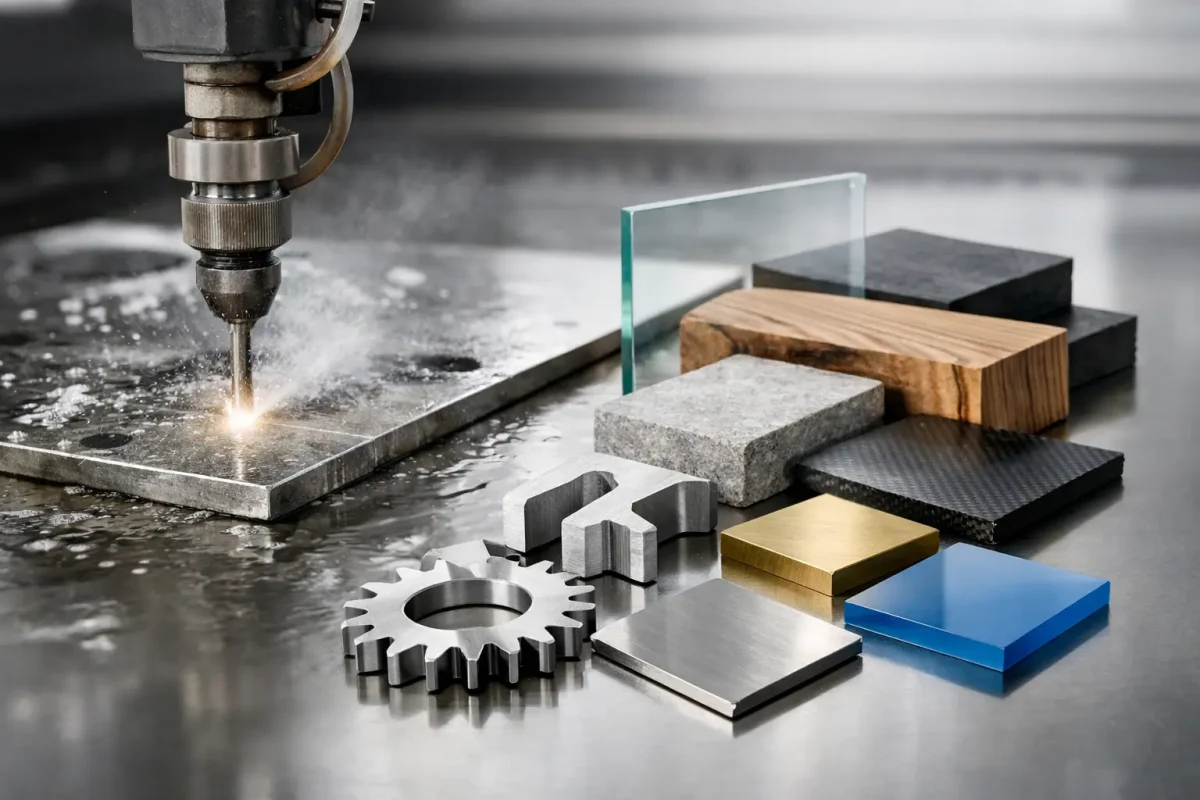
A distorted edge, heat-tinted stainless or a tile that cracks on the final cut can quickly turn good material into costly scrap. Selecting the best materials for waterjet cutting starts with understanding one key advantage: waterjet is a cold-cut process. It profiles material without creating a heat-affected zone, making it a practical choice where dimensional accuracy, clean edges and preserved material properties matter.

Waterjet cutting uses a high-pressure stream of water – up to 60,000 PSI – combined with abrasive garnet for hard materials. For softer materials, pure water may be enough. This flexibility allows one process to handle jobs that would otherwise need several machines, from thick steel brackets and aluminium panels to rubber gaskets, stone features and intricate architectural pieces.

What makes a material suitable for waterjet cutting?

Waterjet cutting is exceptionally versatile, but the best choice still depends on the material grade, thickness, required tolerance, edge finish and intended use. A part that will be welded, powder coated or machined afterwards may allow for a different cut quality than an exposed decorative panel or a precision-fitting component.

The process is especially valuable when heat could affect the job. Unlike thermal cutting methods, waterjet does not harden cut edges, burn protective films, create heat distortion or discolour sensitive materials. It also produces very little mechanical force on the workpiece, which helps when cutting brittle materials or fine internal details.

For many Adelaide fabricators, builders and designers, the decision is not simply whether a material can be cut. It is whether it can be cut accurately, economically and with an edge quality appropriate for the next stage of the project.

Best materials for waterjet cutting

Steel and mild steel

Mild steel is one of the most common waterjet applications. It suits brackets, base plates, gussets, machine parts, profiles and custom fabrication components. Waterjet produces a clean profile without the heat distortion associated with thermal processes, which can be useful on detailed parts, thicker plate and components that require accurate assembly.

For straightforward, high-volume profiles in thinner mild steel, laser cutting may be the faster and more economical option. However, waterjet becomes particularly attractive where thickness increases, where heat must be avoided, or where the part includes tight corners and intricate geometry. The absence of a heat-affected zone can also simplify subsequent machining or welding requirements.

Stainless steel

Stainless steel is an excellent candidate for waterjet cutting because appearance and corrosion performance often matter as much as profile accuracy. Architectural panels, food-grade equipment components, balustrade elements, marine parts and decorative features benefit from a cold-cut edge that is free from heat tint.

Waterjet can cut polished, brushed and coated stainless without exposing the surrounding material to cutting heat. Protective film can remain in place where suitable, helping to reduce handling marks before fabrication. For thin sheet and production quantities, high-definition laser cutting may offer better speed. For thick, sensitive or highly detailed stainless, waterjet is often the better fit.

Aluminium

Aluminium conducts heat rapidly and can be prone to distortion during thermal cutting, particularly in thinner sheet. Waterjet avoids that issue, delivering accurate profiles in aluminium plate, sheet, tread plate and custom panels without melting the cut edge.

This makes it well suited to transport, marine, automotive, building and fabrication work. It is also a strong option for intricate aluminium designs where narrow webs, small holes or detailed cut-outs need to remain flat and clean. The edge may have fine abrasive striations, especially in thicker material, so specify the required finish where parts will be visible or need close-fit assembly.

Brass, copper and other non-ferrous metals

Brass, copper and bronze can be difficult to process cleanly with some thermal cutting methods because of their heat conductivity and reflective properties. Waterjet does not rely on a thermal beam, so it can profile these materials without melting, burr formation or heat-related colour change.

Copper busbars, electrical components, signage, decorative inlays and custom hardware are typical examples. Material cost is often high for these metals, so accurate nesting and careful programming matter. Good preparation helps minimise offcuts and protects the value of the sheet or plate.

Stone, tile and pavers

Natural stone, porcelain tile, ceramic tile and pavers are among the materials where waterjet shows its creative and technical value. A waterjet can produce curved cuts, internal openings, mitres, inlays, logos and repeating patterns that would be difficult or risky to achieve with conventional saws.

Waterjet is particularly useful for high-value tiles and architectural finishes because it applies minimal physical stress. Even so, no brittle material is entirely risk-free. Existing flaws, veins in natural stone, material thickness and the size of narrow sections all influence the result. A test cut is sensible for unusual stone, fragile tiles or critical patterns.

Glass

Glass can be cut with waterjet when the right approach is used. It is suitable for selected architectural, artistic and industrial applications, including shaped panels, decorative pieces and openings. The key is managing the cut path, material support and edge requirements carefully.

Not every glass product behaves the same way. Tempered glass cannot generally be cut after tempering, while laminated and specialty glass require assessment before work begins. Waterjet can be an effective option, but glass projects should be reviewed individually to confirm that the material and design are appropriate.

Rubber, foam and gasket materials

For rubber, foam, cork, felt, plastics and gasket materials, pure-water cutting can produce highly accurate shapes without abrasive contamination. This is useful for seals, insulation, protective pads, packaging inserts, anti-vibration components and custom gaskets.

The lack of heat is a major benefit. Laser cutting can melt or harden some polymers and rubber products, while mechanical methods may compress, tear or pull soft material. A waterjet creates clean profiles with excellent repeatability, including bolt holes, slots and complex internal shapes.

Material density still matters. Very soft foam may need careful support to prevent movement, and some rubber compounds react differently depending on thickness and reinforcement. Providing the exact material specification helps determine the right cutting method and settings.

Timber, composites and specialty sheet

Waterjet cutting can also work well on timber, plywood, fibre cement, carbon fibre, fibreglass and selected composite sheets. It is useful for templates, feature panels, custom signs and specialised industrial components where intricate shapes are required.

The trade-off is moisture sensitivity. Waterjet introduces water to the cut, so untreated timber, MDF and some layered products may absorb moisture or show edge swelling. In these cases, laser cutting or CNC routing may be more appropriate. Composite materials also vary widely: some cut cleanly, while others need trial work to assess delamination, backing layers or water exposure.

Thickness, tolerance and edge quality matter as much as material

A material may be suitable for waterjet cutting, but its thickness and finish requirement determine how the job should be programmed. As thickness increases, cutting speed reduces and the natural taper or fine striation at the cut edge can become more noticeable. Quality settings can reduce these effects, although that increases cutting time and cost.

Be clear about what the part needs to do. A structural bracket hidden inside an assembly may only require a sound, accurate profile. A stainless feature panel, precision machine part or decorative screen may justify a finer cut quality. The drawing, quantity, thickness, material grade and critical dimensions should all be considered before production begins.

Small holes and narrow slots deserve particular attention. Their achievable size depends on material thickness and jet diameter. A knowledgeable cutting partner can advise whether a feature should be waterjet cut, drilled after cutting, or adjusted slightly to improve repeatability.

When waterjet is not the first choice

Waterjet is not automatically the best process for every job. High-volume runs of thin steel, stainless or aluminium often favour laser cutting because it is faster. Materials that must remain completely dry, such as certain timbers, paper products or moisture-sensitive laminates, may be better suited to another process.

There are also jobs where a saw, router or punch is the more economical choice. The right process should be selected around the finished part, not the machine. Having access to both CNC waterjet and laser cutting makes that decision more practical, especially when a project includes different materials or a mix of production and decorative components.

Getting the best result from your material

Good cutting starts before the sheet reaches the machine. Supply a clear drawing or CAD file where possible, confirm the exact grade and thickness, and identify any surfaces that must remain mark-free. If parts need to fit with existing components, include the critical dimensions and tolerances rather than relying on a general description.

For a one-off architectural piece, a sample or proof cut can prevent surprises. For production work, confirming nesting, material supply, cut quality and delivery timing upfront keeps the job moving. Waterjet & Laser SA works with fabricators, builders, manufacturers and designers across Adelaide and beyond to match the process to the material and the outcome required.

The best material choice is the one that arrives at the next stage of your project clean, accurate and ready to use. If the design is unusual, the material is expensive or the tolerance is critical, discuss it before cutting begins – that conversation is often where wasted time and material are avoided.
How to Choose a Cutting Process for Your Project

How to Choose a Cutting Process for Your Project

A part can be perfectly drawn and still fail on the workshop floor if the cutting method is wrong. Heat marks on stainless, distortion in thin sheet, a rough edge on a visible architectural panel, or a delayed production run can all add cost after cutting. Knowing how to choose a cutting process means looking beyond the material name and matching the process to the finished part, its tolerance, its purpose and its deadline.

For most fabrication, construction, engineering and design work, the decision comes down to laser cutting, waterjet cutting or a combination of both across different components. Each process has clear strengths. The right choice is not always the quickest cut on paper – it is the process that delivers parts ready for the next stage with the least rework.

Start with the material and its behaviour

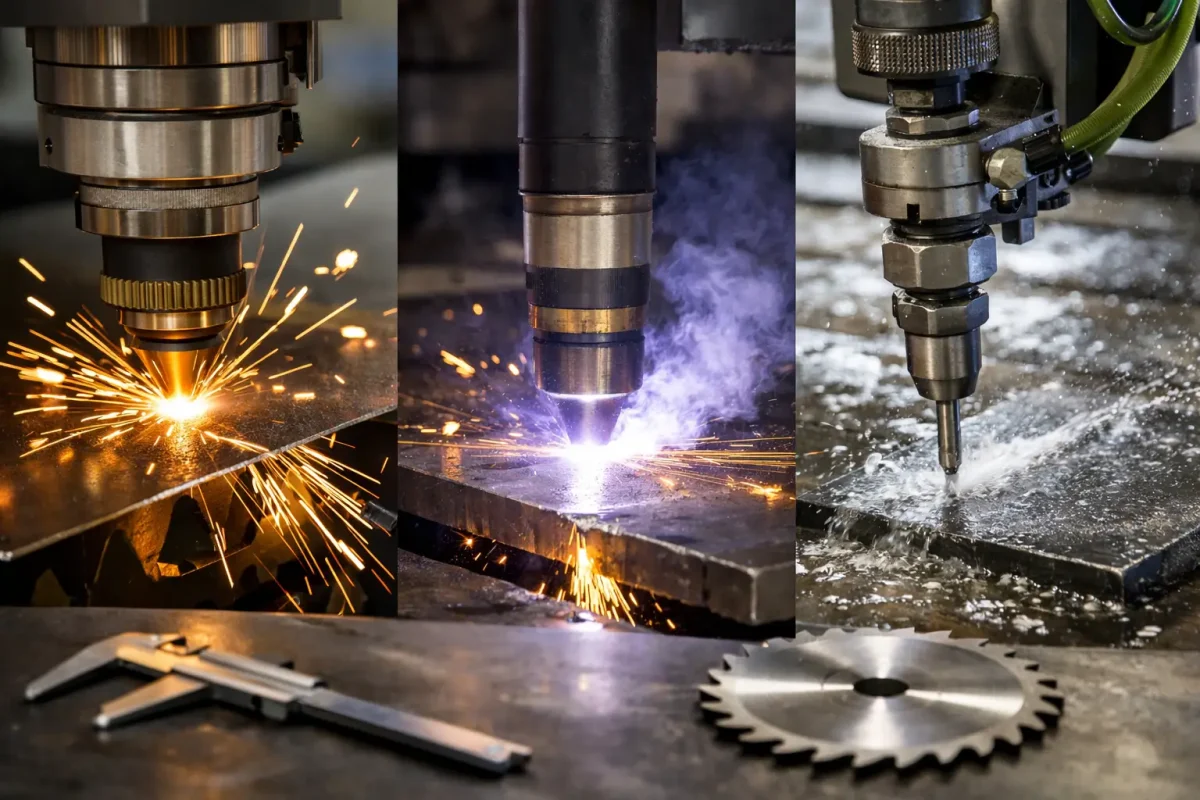
Material is the first filter because laser and waterjet cut in fundamentally different ways. A high-definition laser uses a focused beam to melt or vapourise material along the programmed profile. It is exceptionally efficient for many sheet-metal jobs, particularly where speed, repeatability and fine detail are required.

A CNC waterjet uses a high-pressure stream of water, often mixed with abrasive, to erode the material. At pressures up to 60,000 PSI, it creates an accurate cut without putting heat into the workpiece. This cold-cut process is the deciding factor when heat could alter the material or affect the finished appearance.

Laser cutting is often a strong fit for steel, stainless steel and aluminium sheet where the material thickness and job volume suit laser processing. It is particularly effective for brackets, panels, folded components, enclosures and repeated production parts.

Waterjet has broader material versatility. In addition to metals, it can cut tile, pavers, stone, rubber, foam, gaskets, timber and many composite materials. It is also valuable for metals that must retain their original properties right through the cut edge. If the job involves a non-metal material, a laminated product or a material that is sensitive to heat, waterjet is usually the first process to assess.

How to choose a cutting process by finished-part requirements

The part’s final use matters more than the raw sheet. Ask what must happen once cutting is complete. Will the part be welded, powder coated, polished, installed as a visible feature, machined further or placed straight into service? Those answers change the priority.

When heat distortion is unacceptable

Heat affects materials differently. Thin sheet can move during a thermal process, while certain alloys, coated products and heat-sensitive materials can show changes around the cut edge. In some jobs those effects are minor and easily managed. In others, they create fit-up problems, visual defects or extra finishing work.

Waterjet avoids a heat-affected zone because it is a cold cutting method. This can make it the better option for intricate stainless steel work, thicker material, pre-finished surfaces, tiles and components where dimensional stability is critical. It also avoids the hardened or altered edge that may need consideration before later machining or forming.

That does not mean laser is unsuitable for precision work. A properly selected laser process produces clean, accurate profiles at excellent speed. The practical question is whether the material and design can tolerate thermal cutting, not whether one process is universally more precise than the other.

When edge quality drives the decision

A cut edge is not simply a cut edge. Its quality affects welding preparation, paint adhesion, handling safety, assembly and how much labour is required before delivery. Laser cutting can provide a fine edge on suitable metal sheet, often making it a productive choice for fabricated parts that move quickly into the next operation.

Waterjet cutting produces an edge free from heat tint and thermal distortion. On decorative stainless, aluminium, architectural features and parts with a visible exposed edge, that can reduce finishing requirements. Waterjet edge quality is influenced by material, thickness, cut speed and the quality setting selected. A faster cut may be appropriate for functional parts, while a finer finish may be worth the extra cutting time for a presentation surface or close-fitting component.

Be clear about where the edge will be seen and what it must do. A concealed mounting plate and a decorative screen may share a material type, but they do not need the same cut specification.

When detail, corners and tolerances matter

Both CNC laser and CNC waterjet are capable of intricate profiles when the drawing is prepared properly. Small internal features, sharp corners, narrow webs and detailed patterns still need to be assessed against material thickness and the width of the cutting stream or beam. A feature that looks fine in CAD may not be practical to cut, or may be too delicate to survive handling.

Provide the actual file wherever possible, along with critical dimensions, tolerance requirements and the intended orientation of the part. Identify holes that need to mate with other components, edges that will be folded and surfaces that will remain visible. This allows the cutting method, lead-ins and cutting quality to be chosen for the job rather than applied as a generic setting.

Balance turnaround against the real cost of the job

Fast cutting matters, especially when a fabrication schedule is waiting on parts. Laser is often the efficient option for repeat metal profiles and production quantities. Its speed can make a meaningful difference where there are many identical components or a large number of simple-to-moderate profiles in sheet metal.

However, the fastest machine time is not necessarily the lowest total cost. If laser cutting produces heat effects that require additional grinding, straightening, cleaning or rejection of sensitive parts, waterjet may be the more economical route overall. The same applies when using waterjet prevents material damage on expensive plate, tile or specialised products.

Quantity also changes the decision. For a one-off prototype, the priority may be material compatibility and the ability to cut a complex shape accurately. For a recurring production run, cycle time, nesting efficiency and consistency from batch to batch become more influential. A capable cutting provider will discuss both the immediate quote and the downstream work that follows.

Consider thickness, not just the material grade

Thickness affects cut speed, edge appearance and process suitability. It is not enough to say a part is stainless steel or aluminium. The exact grade, temper where relevant, thickness and sheet condition all matter.

Laser cutting can be highly productive within suitable thickness ranges, but its performance changes as material gets thicker. Waterjet remains a practical option across a wide range of thicknesses and is often selected where thicker metal, mixed materials or heat-free cutting is required. For difficult jobs, a sample cut or a discussion around the required edge finish can prevent assumptions from becoming costly errors.

Also consider sheet condition. Protective film, galvanised coatings, painted surfaces and surface finishes may influence the preferred process and handling method. Mention these details before quoting, particularly if the finished face must remain clean and free of marking.

Give your cutting provider the right job information

Good input produces better parts. A clear request should include the material, thickness, quantity, drawing file, required delivery date and any critical tolerances. It should also state whether supplied material is being used, whether burr removal or finishing is expected, and what the component will do after cutting.

For example, a mining repair part may prioritise durability, accurate hole locations and rapid replacement. An architectural panel may prioritise fine detail, a clean visible edge and consistent pattern spacing. A gasket may require waterjet cutting to preserve the material and achieve the correct profile without heat. These are different jobs, even if each begins with a digital drawing.

At Waterjet & Laser SA, having both laser and waterjet cutting onsite allows the process to be selected around the part rather than forcing every job through one machine. That gives Adelaide fabricators, builders, manufacturers and designers a practical choice when speed, material integrity and finish all need to be considered.

Choose for the next operation, not only the first cut

The best cutting process is the one that supports the whole job. Consider the material’s response to heat, the required edge quality, design detail, thickness, quantity and what happens after the part leaves the cutting table. A short conversation before production can protect accuracy, reduce waste and keep the project moving when it matters most.

Laser Versus Plasma Cutting: Which Suits?

Laser Versus Plasma Cutting: Which Suits?

A bracket that is half a millimetre out, a plate edge that needs extensive grinding, or parts delayed while a contractor reworks them can hold up an entire fabrication job. Laser versus plasma cutting is not simply a question of which machine is better. It is a decision about material, thickness, tolerances, finish requirements and the work that must happen after cutting.

For Adelaide fabricators, builders, engineers and manufacturers, the right choice can reduce handling time, minimise waste and keep production moving. Both processes are proven, capable methods for profile cutting metal. Their strengths are different, and those differences matter on the workshop floor.

Laser versus plasma cutting: the practical difference

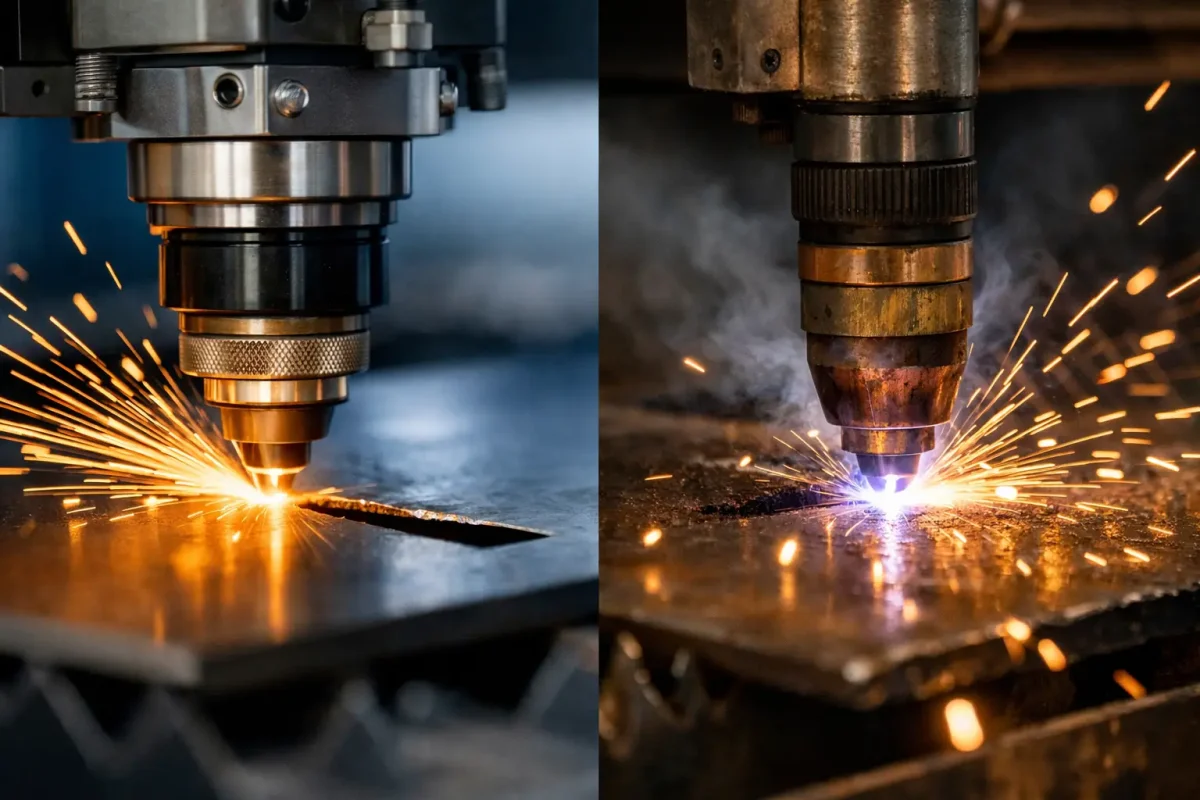
Laser cutting uses a tightly focused beam of light, generally assisted by gases such as oxygen or nitrogen, to melt or vaporise material along a programmed path. Modern fibre laser systems concentrate a very small amount of energy into a precise cutting point. The result is a narrow kerf, detailed profiles and a clean edge on suitable materials.

Plasma cutting uses an electrically conductive gas that has been heated into plasma. The plasma arc transfers energy to the workpiece and melts through the metal, while the gas stream removes molten material from the cut. It is a powerful process for conductive metals, particularly thicker carbon steel.

The distinction is straightforward. Laser is usually chosen where accuracy, fine detail and edge presentation are priorities. Plasma is often selected where thicker steel must be cut efficiently and minor finishing is acceptable. The best process depends on the specification, not the label on the machine.

Accuracy and detail: where laser earns its place

Laser cutting is the stronger option for intricate parts. Its narrow kerf and small focal point make it well suited to tight radii, small holes, tabs, slots, lettering and decorative patterns. This is valuable for architectural screens, control panels, brackets, enclosures and production components that need to fit together first time.

A laser-cut edge can also reduce downstream work. On thin to medium-gauge steel, stainless steel and aluminium, a correctly set laser often produces a clean, consistent finish that needs little more than deburring. For jobs with many repeated parts, that saving in grinding and fit-up can be more significant than the cutting price alone.

Laser does introduce heat into the material. The heat-affected zone is typically narrow, but it still exists. For most fabricated components this is manageable. Where a material is highly heat-sensitive, very thick, or must retain its original properties right to the cut edge, another process may be more suitable.

Fine features need more than a good drawing

Even the most capable laser cannot create a feature that is too small for the material thickness or the required tolerance. Hole diameter, internal corner radius, lead-in position and the condition of the source file all influence the result. Supplying a clear DXF or DWG file, with dimensions confirmed before cutting, helps prevent unnecessary revisions.

A capable cutting provider will also review whether parts can be nested efficiently. Better nesting reduces scrap and can make a meaningful difference to the cost of larger production runs.

When plasma cutting is the better commercial choice

Plasma cutting is far from a second-best process. For thicker mild steel plate, it can be an efficient and cost-effective choice, especially where parts will be welded, machined or ground after cutting. Structural plates, heavy brackets, base plates and larger industrial components are common plasma applications.

High-definition plasma has improved edge quality and dimensional control considerably compared with older conventional plasma systems. It can produce accurate, useful parts at good speed. However, the kerf is generally wider than laser, and edge bevel, dross or oxide may be more noticeable depending on thickness, settings and cut direction.

That does not make plasma unsuitable for precision work. It means the tolerance and finish requirements need to be realistic. If a part is being welded into a heavy assembly, a small amount of edge preparation may be entirely acceptable. If it is a visible stainless steel feature panel or a closely fitting mechanical component, laser is usually the more appropriate starting point.

Plasma only cuts electrically conductive materials. It is excellent for steel, stainless steel and aluminium, but it cannot cut rubber, timber, foam, tiles or composite materials. This limitation matters for projects involving mixed materials or non-metal components.

Speed, thickness and cost are linked

It is tempting to choose based on cutting speed alone, but the fastest cut is not always the fastest completed job. A plasma-cut component may leave the table quickly, yet require cleaning before welding or coating. A laser-cut component may take longer per metre on certain plate thicknesses but arrive at assembly ready for immediate use.

Material thickness changes the equation. Laser cutting is highly productive across thin and medium thickness metal, where its speed and finish are difficult to beat. As carbon steel becomes thicker, plasma can become more economical and may offer faster throughput. Exact capability varies by machine power, material grade, gas selection and the required edge quality, so there is no single thickness where every job should switch from laser to plasma.

Cost should be assessed as a total manufacturing cost. Consider material yield, cutting time, consumables, edge clean-up, machining allowances, weld preparation, coating requirements and the risk of rejected parts. A lower per-part cutting rate can be quickly lost if every part needs manual dressing.

For short runs, setup and programming also matter. A well-prepared file and clear job requirements allow a cutting team to move quickly from quote to production. For repeat orders, keeping approved drawings and specifications on file supports consistent results from batch to batch.

Heat, distortion and edge condition

Both laser and plasma are thermal cutting processes, so both can create heat-related effects. Plasma generally puts more heat into a wider area, particularly on thicker material. Thin sheet can distort if it is not programmed and supported correctly. Laser has a smaller heat-affected zone, making it a better fit for fine sheet work and detailed profiles.

The cut edge is influenced by more than the process itself. Material condition, plate flatness, gas quality, nozzle condition, power settings and cutting speed all contribute. Rust, mill scale and protective coatings can affect cut quality, particularly when a job demands a clean cosmetic finish.

If heat distortion is unacceptable, waterjet cutting deserves consideration. Waterjet is a cold-cut process that uses a high-pressure stream, up to 60,000 PSI, with abrasive added for hard materials. It can cut steel, stainless steel, aluminium, tile, stone, rubber, foam, timber and many other materials without a heat-affected zone. It is often the right answer for thick material, heat-sensitive applications, unusual materials and highly detailed work where material integrity is critical.

Choosing the right process for your job

Start with the finished part, not the cutting method. Ask what material is being cut, how thick it is, the tightest tolerance required and whether the cut edge will be visible, welded, painted or machined. Also consider whether there are fine internal details, small holes or intricate patterns that demand laser-level precision.

Laser is commonly the best fit for detailed profiles, thin to medium metal, clean edges and parts requiring minimal finishing. Plasma is a practical choice for heavier conductive plate, structural work and jobs where cutting economy and throughput take priority over a fine cosmetic edge. Waterjet becomes particularly valuable where heat must be avoided or the material falls outside the limits of thermal cutting.

At Waterjet & Laser SA, having laser and waterjet capability onsite means a job can be assessed against the required outcome rather than forced into a single process. That is particularly useful for fabrication businesses balancing tight lead times with quality requirements.

The most useful quote request includes the material grade and thickness, quantity, drawing file, critical dimensions and any finishing expectations. With those details clear from the start, the cutting process can be selected to suit the part, the budget and the deadline – leaving your team with components that are ready for the next stage of work.

How to Cut Hardened Steel Without Ruining It

How to Cut Hardened Steel Without Ruining It

A hardened pin, wear plate or tool-steel component can turn a straightforward fabrication job into expensive rework very quickly. Knowing how to cut hardened steel starts with recognising that the material’s hardness is also its weakness: it resists ordinary cutting tools, builds heat quickly and may crack or lose its carefully controlled properties if cut by the wrong process.

For a clean, accurate result, choose the process around the steel grade, thickness, required tolerance and whether the hardness must remain unchanged right to the cut edge. There is no single method that suits every job.

Why hardened steel needs a different approach

Hardened steel has been heat treated to increase hardness, wear resistance and strength. Common examples include hardened carbon steels, alloy steels, tool steels, abrasion-resistant plate and induction-hardened shafts. The hard surface can be difficult for drills, saw teeth and conventional machining cutters to penetrate.

Heat is the main issue. A high-temperature cutting process can create a heat-affected zone beside the cut. Depending on the grade and prior heat treatment, this zone may soften, become brittle, distort or develop small cracks that are not obvious until the part is put into service. On a mining wear component, precision tool or automotive part, that risk matters.

The job also becomes harder when the part has tight internal corners, holes, narrow slots or a profile that must fit another fabricated component first time. Cutting a rough blank is one thing. Producing a repeatable, accurate finished profile is another.

Choose the cutting method before starting

The right method depends on the outcome required, not simply what tool is closest to hand. Abrasive cutting, laser cutting and abrasive waterjet cutting all have a place, but their trade-offs are very different.

Abrasive cut-off wheels for simple, non-critical cuts

An angle grinder or cut-off saw fitted with a suitable abrasive disc can cut many hardened steels. This is often practical where the job is a simple straight cut, edge quality is not critical and the material will be further machined or welded.

The limitation is heat and control. A disc can leave a rough edge, introduce discolouration and produce enough local heat to alter the surface near the cut. It also creates sparks, dust and a wider kerf than a precision CNC process. Keep pressure steady rather than forcing the disc, support the work fully and allow the material to cool naturally between cuts if heat build-up is noticeable.

Do not use a standard toothed saw blade unless it is specifically rated for the material. Hardened steel can strip teeth or grab the workpiece, creating a safety issue as well as a damaged part.

Laser cutting for speed and production efficiency

High-definition laser cutting can be an efficient option for suitable grades and thicknesses of hardened steel, particularly where production speed and repeatability are priorities. It produces a narrow kerf, handles detailed profiles well and is highly effective for batches of parts.

However, laser cutting is thermal. The cut edge and a narrow adjacent zone are exposed to significant heat. For some hardened or abrasion-resistant steels this is acceptable, especially if the design accounts for it or the edge will be machined afterwards. For components where the original hardness must be preserved directly to the profile, the heat-affected zone needs careful consideration.

Laser cutting also depends on the steel grade, plate condition, thickness and final application. A test cut is sensible for critical work, particularly when cutting customer-supplied material with an unknown heat-treatment history.

Abrasive waterjet cutting for cold-cut accuracy

Abrasive waterjet cutting is often the preferred method when hardened steel must retain its material properties. It uses a high-pressure stream of water, combined with abrasive garnet, to erode the material rather than melt it. At pressures up to 60,000 PSI, the process can cut hardened steel without introducing a heat-affected zone.

That cold-cut advantage is valuable for tool steels, hardened machine parts, wear plate and intricate profiles where distortion, edge hardening or local softening would create downstream problems. It also allows complex shapes, small internal features and tight nesting with minimal material waste.

Waterjet is not always the fastest option for every thickness or production volume. On straightforward parts where thermal effects are acceptable, laser may be the more economical choice. But when preserving the steel’s existing hardness is non-negotiable, waterjet provides a far lower-risk path to an accurate profile.

Prepare the job properly

Before any cutting begins, identify the material as accurately as possible. “Hardened steel” is a broad description, and a hardened mild-steel component behaves differently from a high-carbon tool steel or abrasion-resistant plate. If available, provide the material grade, thickness, hardness specification and any certificates with the drawing.

The drawing should state finished dimensions, tolerances, hole sizes, edge requirements and which face is the datum. This is particularly important for parts that will be bolted, assembled, folded or machined after cutting. If a hole will be tapped later, allow the correct pilot diameter and consider whether secondary machining is required to meet the thread specification.

Good support also matters. Hardened steel can carry internal stress, and a poorly supported plate or bar may move as the profile is released. CNC cutting programs can use suitable lead-ins, cut sequencing and tabs where needed to keep parts stable during the process.

Control heat, stress and edge condition

If a thermal process is used, avoid treating the edge as an afterthought. The cut may look clean but still contain a narrow altered zone. For high-load components, check whether the edge will be subject to wear, fatigue, impact or welding. These service conditions determine whether the altered area is acceptable.

Avoid rapid quenching of a hot cut edge unless the material supplier or engineering specification calls for it. Sudden cooling can add stress and increase cracking risk in some steels. Likewise, avoid aggressive grinding immediately after cutting if the part is already hot. Let it cool, inspect it, then finish the edge with an appropriate grinding or deburring process.

For waterjet-cut parts, the edge is free from thermal distortion, but cut quality still needs to match the application. A faster cut can be suitable for rough blanks, while a slower, higher-quality cut is better where the edge is visible, seals against another surface or requires minimal finishing. Specify the intended use rather than assuming every job needs the same finish.

Know when cutting should be outsourced

Cutting hardened steel in-house can make sense for a quick trim or non-critical repair. It becomes less practical when the job needs repeatable dimensions, intricate geometry, multiple material types or a reliable finish without trial-and-error.

Outsourcing also removes the need to hold specialist equipment, abrasive consumables, extraction systems and trained operators for occasional work. More importantly, it reduces the risk of losing costly material to a cracked edge, excessive taper, distorted profile or incorrect hole position.

For Adelaide fabricators, builders, engineers and designers, Waterjet & Laser SA can assess the drawing and material requirements before selecting laser or cold-cut abrasive waterjet processing. Having both capabilities onsite means the cutting method can be matched to the part, rather than forcing every job through one machine.

Inspect the part before it moves downstream

Check the finished profile against the drawing before welding, coating or assembly. Confirm critical dimensions, hole locations, edge condition and flatness. On hardened components, look closely for edge cracking, excessive burrs or visible heat effects where a thermal method has been used.

If the component is safety-critical or will operate under high load, the inspection plan may need to include hardness testing, non-destructive testing or engineering approval. Cutting is only one stage of the job, but it can determine whether every stage after it runs smoothly.

The best way to cut hardened steel is the one that protects the material, meets the tolerance and avoids unnecessary finishing. Start with the part’s final purpose, not the tool in the shed, and the finished component is far more likely to perform as designed.

Fabrication Lead Times: What Sets the Schedule

Fabrication Lead Times: What Sets the Schedule

A fabrication job can look simple on paper, then become the item holding up an entire build. A bracket that arrives late can stop assembly. A decorative screen with an incorrect cut-out can delay installation. Understanding fabrication lead times helps project managers, fabricators and builders plan around the real work involved, rather than relying on a best-case estimate.

For profile cutting, lead time is not just the time a sheet spends on a laser or waterjet table. It includes reviewing the drawing, confirming material, nesting parts efficiently, programming the machine, cutting, checking finished components and arranging collection or delivery. The quickest path is usually a well-prepared job with clear requirements, not simply choosing the fastest machine.

What fabrication lead times actually include

The clock should ideally start once the job specification is confirmed. An enquiry may include a PDF sketch, a material description and an approximate quantity, which is enough to begin a conversation but may not be enough to cut accurately. Before production, the cutting provider needs to know the final dimensions, material grade and thickness, quantity, tolerances, edge expectations and any requirements for marking, countersinks or tabs.

A clean DXF or DWG file can reduce administration and programming time considerably. It allows the cutting path to be checked, parts to be nested and potential issues to be identified before material is loaded. A dimensioned PDF is useful alongside the drawing, particularly where critical measurements, grain direction or finished-part orientation matter.

Material availability is often the next factor. Common steel, stainless steel and aluminium sizes may be available quickly, while unusual grades, heavy plate, specialist finishes or customer-supplied materials require more coordination. For waterjet work, the material range is broad, from metal and tile to rubber, foam, timber and gasket materials. That versatility can prevent a job being split between suppliers, but each material still needs to be assessed for handling, thickness and desired finish.

Production itself includes more than cut speed. Loading a large plate safely, setting up the correct nozzle or laser parameters, cutting test pieces where needed and completing quality checks all contribute to a reliable turnaround. These are not delays to be removed at all costs. They are the controls that help ensure parts fit when they reach the workshop or site.

Why cutting method affects the schedule

Laser cutting is often the efficient choice for high-volume metal parts and thinner sheet where speed and a clean, consistent edge are priorities. A high-definition laser can process repeated profiles quickly once the material and program are ready. For fabricated components such as brackets, panels, gussets and production parts, this makes it a practical option when quantities rise or deadlines are tight.

Waterjet cutting works differently. It uses a high-pressure stream, up to 60,000 PSI, with abrasive added when cutting hard materials. Because it is a cold-cut process, it does not introduce a heat-affected zone or heat distortion into the material. That matters for thicker metals, heat-sensitive alloys, intricate profiles and materials that are unsuitable for laser cutting.

The waterjet process can take longer per metre of cut than laser cutting in some metal applications. However, the overall lead time may still be better if it avoids secondary work, prevents heat-related warping or handles a non-metal material in-house. A part that needs to remain flat, retain its material properties or have a highly detailed internal profile may be faster to complete correctly by waterjet than to repair after an unsuitable process.

The right question is not, “Which machine is quickest?” It is, “Which process delivers the required part with the least rework and risk?” For a deadline-driven job, that distinction matters.

The factors that can extend a cutting schedule

Complexity affects fabrication lead times in ways that are not always obvious from the outside. A large simple rectangle may cut quickly but need careful material handling. A small detailed pattern may use little material yet require extensive programming and a long cutting path. Tight inside radii, numerous holes, fine bridges and intricate decorative features all add machine time.

Quantity also changes the equation. One-off prototypes may need extra drawing review and setup, while repeat production benefits from established programs and known settings. A batch of 200 parts takes longer to cut than five parts, but its lead time per part can be more efficient because setup is shared across the run.

Tolerance requirements deserve an early conversation. Standard fabrication tolerances are suitable for many structural and general-purpose components. Precision mating parts, press-fit features or components that must align with existing assemblies may need more detailed checking. This does not mean the job cannot be completed quickly. It means the cutting provider needs the information before production is scheduled.

Finishing requirements can add time as well. Cut parts may be ready to collect directly from the machine, or they may require deburring, part identification, protective handling, sorting into kits or packaging for transport. If the next operation is folding, welding, powder coating or installation, knowing that sequence helps determine what level of edge finish and preparation is genuinely needed.

Transport is the final variable. Adelaide metropolitan deliveries can often be coordinated efficiently, but regional South Australian and interstate jobs need allowance for freight timing, packaging and site access. A finished part is only useful when it arrives where it is needed, in a condition ready for the next stage of work.

How to reduce fabrication lead times before ordering

The most effective way to shorten a schedule is to remove uncertainty before the material reaches the cutting table. Send the final editable cutting file wherever possible, supported by a PDF that clearly identifies material, thickness, quantity and critical dimensions. If revisions are possible, label the drawing revision and make sure everyone is working from the same version.

It also helps to state the real required date. There is a difference between a genuine shutdown risk, a preferred delivery date and a job that can be grouped with other work. Clear timing allows production to be scheduled properly and makes it easier to identify whether a faster process, alternative material size or staged delivery could help.

Where a project includes multiple part types, provide the full package at the same time. A cutting provider can then consider material utilisation, common thicknesses and production sequence across the job. Combining compatible parts on the same sheet can reduce waste and avoid separate setup periods. It can also make collection and workshop receiving simpler.

For repeat work, retain the approved drawing files and part numbers. Once a program has been proven, reordering is generally more straightforward, provided the material, quantity and specification are unchanged. This is particularly valuable for fabricators and manufacturers with regular brackets, covers, panels, wear parts or gasket profiles.

When urgent work needs a different approach

Urgent jobs are sometimes unavoidable. Equipment fails, site measurements change, a supplier misses a date or a part is damaged during fabrication. In those situations, speed depends on fast, accurate decisions. The cutting provider needs a confirmed file, material approval and a clear understanding of what cannot change.

There may be trade-offs. A readily available material grade or sheet size could be suitable, while a special order may not. A smaller first batch might get production moving while the balance follows. Some non-critical features may be deferred until a later revision. These options should never compromise safety, engineering requirements or the finished application, but practical flexibility can protect a programme.

At Waterjet & Laser SA, having CNC laser and waterjet capability onsite provides a useful advantage when selecting the right route for a job. Rather than forcing every profile through one process, the material, thickness, edge quality, complexity and deadline can be considered together. That is how rapid turnaround remains connected to precision cutting, rather than becoming a promise that creates problems downstream.

Plan for the part, not just the date

Reliable fabrication lead times are built on clear drawings, available material, suitable cutting technology and honest scheduling. A supplier who asks practical questions early is protecting the finished result, not creating unnecessary steps.

If a component is critical to your next fabrication stage, send the details early enough to assess the best cutting method and production window. A few minutes spent confirming the specification can save days of rework, freight changes and idle workshop time.

Secret Link