
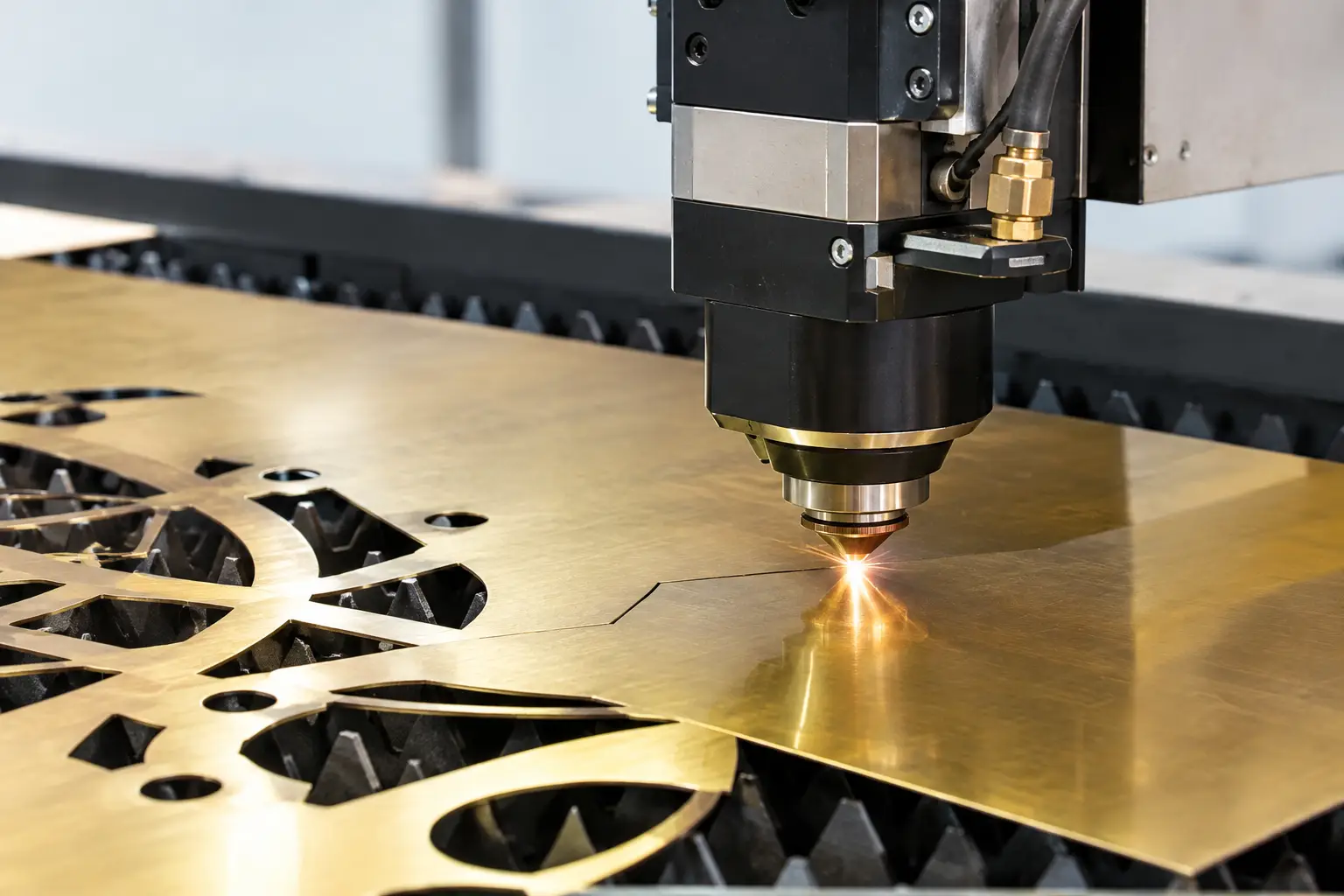
A brass component can look straightforward on a drawing, then become expensive when the wrong cutting process leaves a burnt edge, visible marking or distortion around a fine feature. So, can laser cut brass? Yes – with the right laser, capable operators and settings matched to the specific brass grade, thickness and finish.
Brass is regularly specified for architectural details, electrical components, signage, decorative panels, plumbing-related parts and precision fabricated items. It machines well and presents beautifully, but its high reflectivity and heat conductivity make it less forgiving than mild steel. The question is not simply whether brass can be laser cut. It is whether laser cutting will deliver the required edge condition, tolerance, turnaround and cost for the finished part.
Can laser cut brass accurately?
A modern fibre laser can cut many brass sheet applications accurately and efficiently, particularly where the material is relatively thin and the job includes repeated profiles, holes or intricate geometry. The focused laser beam creates a narrow kerf, allowing fine details and close nesting that can reduce material waste.
Accuracy, however, is only useful when the profile remains clean and consistent. Brass transfers heat away from the cut quickly, while its bright surface can reflect a portion of the laser energy. Those characteristics affect piercing, cutting speed and the amount of heat introduced near the edge. A production-ready result relies on controlled power, focus position, feed rate and assist gas, rather than a generic setting selected for another metal.
For many jobs, laser cutting produces crisp profiles with little post-processing. Small burrs or a light oxide tint can still occur, depending on the alloy, thickness and cut parameters. If the part will be polished, brushed, powder coated or incorporated into a hidden assembly, this may be immaterial. On exposed brass lettering or a premium architectural feature, the edge appearance deserves more attention before production begins.
Why brass behaves differently under a laser
Brass is an alloy of copper and zinc. The copper content contributes much of the material’s conductivity and reflectivity, while the exact alloy composition changes its cutting response. Free-machining brass, cartridge brass and specialist grades should not automatically be treated as the same material simply because they share the name brass.
Reflectivity affects the start of the cut
Highly reflective metals can send laser energy back towards the cutting head, especially during piercing. Modern fibre laser equipment includes safeguards and has made reflective-metal processing far more practical than it once was, but brass still needs careful handling. A clean, stable pierce is essential. Poor piercing can leave spatter, a larger start mark or an inconsistent entry point that is noticeable on detailed work.
Surface condition also matters. Protective film, fingerprints, oxidation and mill finish can alter how the beam initially interacts with the sheet. Where presentation matters, test cuts in the supplied material are more valuable than assumptions based on a previous job.
Heat moves quickly through the sheet
Brass conducts heat efficiently, which can make it harder to maintain a stable molten zone at the cut front. The operator may need to adjust cutting speed and power to maintain full penetration without overcooking the edge. Very small holes, narrow slots and closely spaced features concentrate this challenge because heat can build up in a small area.
Laser cutting does create a heat-affected zone, or HAZ, beside the cut edge. On thin brass it is often limited, but it is still a real consideration for parts that must stay perfectly flat, retain a particular temper or receive a highly visible finish. The thicker the material and the finer the detail, the more worthwhile it is to assess laser cutting against a cold-cut alternative.
What determines brass laser-cut quality?
Material thickness is usually the first practical filter. Laser cutting is especially efficient for thinner sheet where speed is a priority. As brass becomes thicker, cutting slows and managing heat becomes more demanding. The right choice then depends on the profile complexity, acceptable edge finish and whether the part needs zero heat distortion.
Part design is next. A clean DXF or other production drawing should show the finished dimensions, hole sizes, internal radii and any areas where the face finish must remain protected. Features placed too close together can cause local heat build-up. Tight inside corners may also need appropriate relief or a small radius, depending on the required tolerance and the material thickness.
Assist gas plays a major role. Nitrogen is often used where a cleaner, lower-oxidation edge is preferred. Other gas choices can improve cutting behaviour for particular jobs but may change edge colour or the amount of clean-up required. There is no universal best setting. The correct approach is to match the process to the part’s final use, rather than paying for a cosmetic finish where it cannot be seen or accepting heat marking where it will be prominent.
Can laser cut brass, or is waterjet better?
Laser and waterjet are both precision processes, but they solve different problems. Laser cutting is commonly the faster option for suitable brass sheet, particularly for batches of repeated components. Its narrow kerf and fast cycle times make it a strong choice for brackets, tags, covers, decorative inserts and production parts with detailed profiles.
Waterjet cutting uses a high-pressure stream of water, up to 60,000 PSI, mixed with abrasive for metal cutting. It is a cold-cut process, so there is no HAZ, no heat distortion and no change to the material’s properties at the cut edge. This can make waterjet the better option for thicker brass, heat-sensitive parts, highly finished material or designs where the edge must not show thermal effects.
That does not mean waterjet is automatically the premium answer for every brass job. It can be slower than laser on thin sheet, and its cut edge can show fine striations depending on speed and quality settings. For a job where fast turnaround and efficient nesting matter most, laser may provide better value. For a component where material integrity is non-negotiable, waterjet can justify the additional processing time.
Having both processes available onsite removes the need to force every drawing through one machine. At Waterjet & Laser SA, the material, thickness, finish and intended application can be assessed before the cutting method is selected. That is a practical advantage when a project includes brass alongside stainless steel, aluminium, rubber or other materials that respond differently to heat.
Preparing a brass job for cutting
The best outcomes start before the sheet reaches the cutting bed. Providing complete job information helps prevent delays, unnecessary rework and variations in finish between prototype and production.
For an accurate quote and process recommendation, provide:
- the brass grade, thickness and whether you are supplying the material;
- a dimensioned drawing and a clean vector file where available;
- the required quantity, including whether the job is a one-off, prototype or repeat run;
- the final use of the part, especially if cut edges will be visible, polished, plated or powder coated; and
- critical tolerances, hole sizes and any need for protective film or careful face handling.
If there is uncertainty about the alloy or finish, a sample piece can prevent a costly surprise. A short test cut can confirm edge appearance, hole quality and whether laser or waterjet will best suit the result. This is particularly sensible for polished brass, patterned sheet and client-facing architectural work, where a small mark may be unacceptable even if the dimensions are correct.
Common issues and how to avoid them
The most common issue is specifying a highly polished brass finish without considering the cut edge. Laser cutting may leave a slight colour change near the profile, which can be removed in some finishing processes but not all. Agreeing on an acceptable sample standard before cutting a full batch protects both the budget and the programme.
Another issue is designing holes and slots that are too small for the material thickness or too close to other features. The drawing may be mathematically possible, yet difficult to cut consistently at production speed. An experienced cutting provider can identify these risk areas early and suggest modest changes that preserve the design while improving repeatability.
Finally, do not treat brass as interchangeable with steel when requesting a quote. Calling out the exact material and thickness allows the operator to estimate cutting time properly and choose the process that avoids unnecessary heat effects, poor piercing or edge clean-up.
Brass rewards careful process selection. When the finish, function and volume of the job are clear from the start, laser cutting can be a fast and precise solution – and when heat is the risk, waterjet provides a clean alternative without compromising the design.