
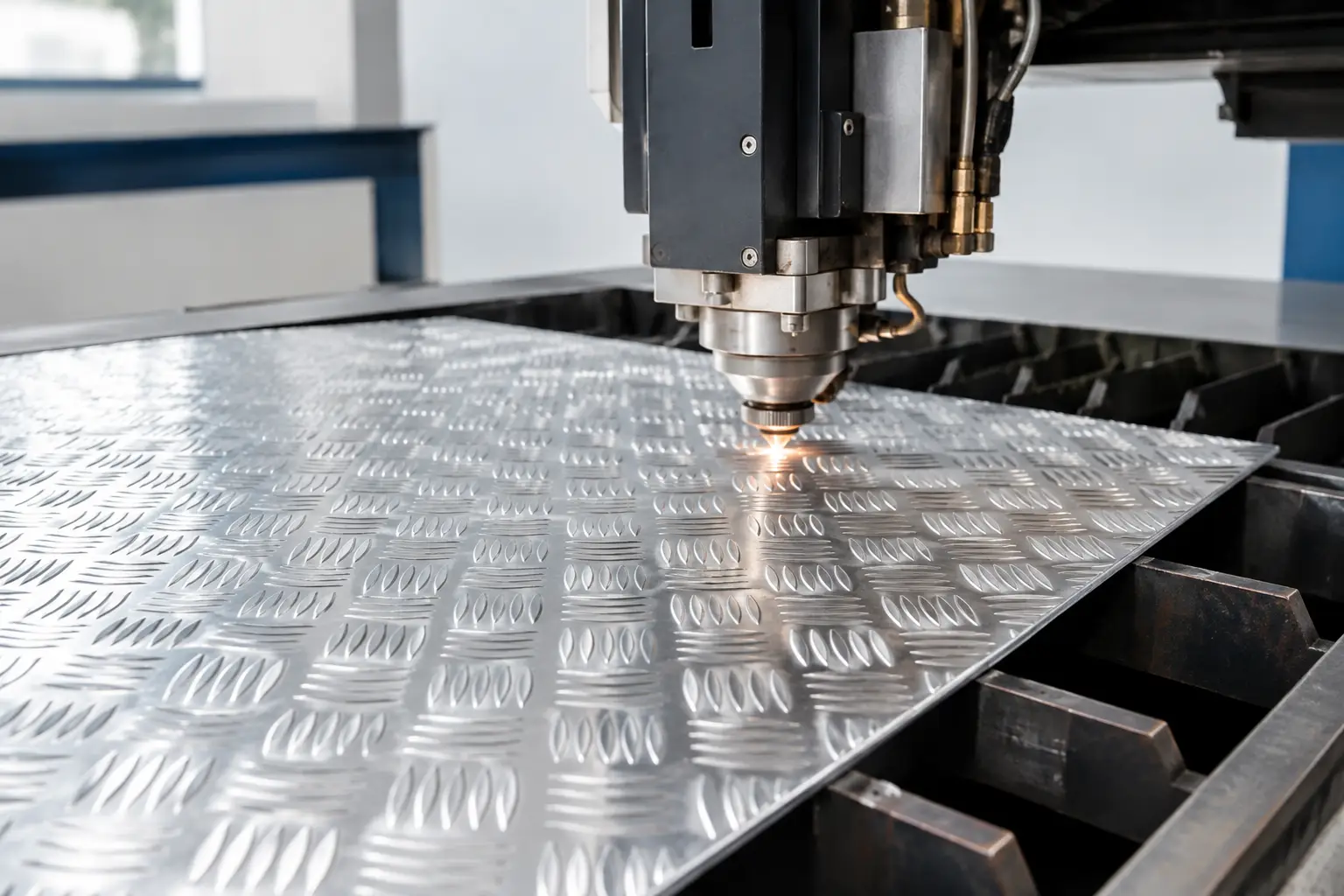
A checker plate tread that arrives with warped edges, scorched cut lines or dimensions that do not fit is more than an inconvenience. It can hold up fabrication, create rework on site and compromise the finished look of a vehicle, walkway or enclosure. To cut aluminium checker plate properly, the cutting process must suit the sheet thickness, grade, profile detail and required edge finish.
Aluminium checker plate is widely used because it is light, corrosion resistant and provides practical slip resistance. Its raised pattern also makes it less forgiving than flat sheet. The face must be handled carefully, the material needs adequate support, and the chosen process has to produce a consistent profile without unnecessary heat or mechanical stress.
For Adelaide fabricators, builders, manufacturers and custom project teams, professional CNC cutting removes the uncertainty from parts that need to fit first time.
Why aluminium checker plate needs the right cutting method
Checker plate, also called tread plate, is not simply flat aluminium with a decorative surface. Its raised diamonds or bars affect how the sheet sits on a cutting bed and how it should be measured. Where the finished part needs to sit flush against another component, the pattern direction and orientation can matter just as much as the outside dimensions.
The material’s high thermal conductivity is another consideration. Aluminium moves heat quickly, which can make heat input harder to control than many people expect. With the wrong settings or an unsuitable method, thin sheet can distort and cut edges can require more cleaning before fabrication.
A hand-held saw, jigsaw or plasma cutter can have a place for a rough, simple job. But they are rarely the best option for repeated parts, intricate radii, internal cut-outs or components that need predictable tolerances. Manual cutting also increases the chance of scratches across the raised face, burrs and variations between parts.
CNC waterjet and laser cutting provide a more controlled alternative. The better choice depends on the job, rather than one process being right for every checker plate application.
Waterjet cutting aluminium checker plate
Waterjet cutting uses a focused stream of water, mixed with abrasive when cutting metal, at pressures up to 60,000 PSI. It cuts through the material rather than melting it. This cold-cut process is a major advantage where preserving aluminium’s material characteristics and avoiding a heat-affected zone are priorities.
For checker plate, waterjet is particularly useful when the job involves thicker material, detailed shapes or a clean edge that will be visible in the finished product. The sheet is supported during cutting, and the process does not introduce heat distortion into the surrounding aluminium. That can reduce downstream straightening and make it easier to assemble accurately cut parts.
Waterjet also handles complex internal features well. Access panels, brackets, machine guards, ute tray components, stair treads, kick plates and custom architectural details can be cut directly from a digital drawing. Sharp inside corners still require sensible design allowances because a waterjet stream has a kerf width, but CNC programming can account for this and keep profiles true to the supplied file.
There are trade-offs. Waterjet is generally not the fastest option for every thin, high-volume aluminium part. The abrasive cutting process can also leave a fine textured edge, with the finish influenced by material thickness and required cutting speed. For many fabrication applications this is an excellent finished edge, but the required appearance should be discussed before production begins.
When waterjet is the practical choice
Waterjet is often the preferred process when heat must be avoided, the checker plate is relatively thick, or the profile has intricate curves and multiple internal cut-outs. It is also well suited to projects where the same job includes different materials, such as aluminium components alongside rubber, foam or gasket material.
It is a capable option for one-off prototypes and production runs alike. The key benefit is consistency: once the program and material are confirmed, subsequent parts can be cut to the same profile without relying on manual marking or hand finishing.
Laser cut aluminium checker plate for speed
High-definition laser cutting can be an efficient solution for aluminium checker plate, particularly where the material is suitable for laser processing and the work calls for quick, repeatable profiles. A laser concentrates energy into a very small cutting path, making it effective for clean outlines, holes and production quantities.
On thinner aluminium sheet, laser cutting can offer significant speed advantages. This matters when a fabricator needs a batch of identical access covers, floor panels, guards or brackets ready for folding, welding or installation. CNC nesting can also make efficient use of the sheet, helping reduce offcut and material waste.
However, laser cutting is a thermal process. Heat control, machine settings and the material itself all influence edge quality and the potential for local heat effects. Experienced operators assess thickness, part geometry and finish requirements before selecting laser cutting. A narrow strip or highly detailed part may respond differently from a large, open panel.
The raised face of checker plate deserves attention as well. Material should be loaded and handled in a way that protects the visible surface, especially if it will remain exposed after installation. Protective film, where supplied on appropriate material, can help during handling but is not a substitute for careful process control.
Choosing laser or waterjet
The decision usually comes down to four practical questions: How thick is the aluminium? How intricate is the design? Does the part need to avoid heat input? How quickly are the parts required?
Laser cutting can be the efficient choice for suitable thinner sheets and repeat production. Waterjet is often the stronger option for thicker checker plate, detailed profiles or parts where cold cutting is essential. If the job has a visible architectural finish or must mate with pre-existing fabricated components, the required edge quality and tolerance should lead the conversation.
At Waterjet & Laser SA, having both processes on site means the material is not forced into a single cutting method. The process can be selected around the job’s actual requirements, with clear advice before production starts.
Details to confirm before cutting begins
A good cutting result starts with complete job information. Supply a DXF file where possible, with a clear indication of finished dimensions, hole sizes and any features that are critical to fit. A PDF drawing is useful alongside the CNC file because it gives the operator a reference for orientation, notes and visible-face requirements.
Confirm whether dimensions are measured over the raised pattern or from the base material. For most profile cutting, the difference does not alter the programmed shape, but it can matter when a part must finish at a precise overall height or sit against a flat surface.
Pattern direction should also be nominated. On a single bracket it may be purely visual. On a run of stair treads, wall panels or vehicle components, inconsistent pattern direction can make an otherwise accurate job look poorly planned. If appearance matters, identify the visible face and preferred tread orientation before cutting.
Allow for practical fabrication needs as well. Very small holes in thick aluminium, narrow webs between cut-outs and extremely tight internal corners can require design adjustments. These are not barriers to cutting, but addressing them early avoids delays and creates parts that are easier to fabricate and stronger in service.
Protecting the finished plate after cutting
The cutting process is only one part of achieving a professional result. Aluminium checker plate can mark during transport, stacking and fabrication, particularly on the raised face. Cut parts should be separated where practical and kept clear of steel swarf or grinding dust, which can contaminate the surface and create staining issues later.
If edges will be handled frequently, used in a public area or incorporated into vehicle fit-outs, ask whether a light edge clean-up is required. While CNC cutting can produce a high-quality edge, the final requirement varies. A concealed mounting plate has different finish expectations from a polished commercial entry threshold.
The strongest approach is to treat cutting as part of the wider build, not an isolated task. Provide the material specification, drawing, quantity, finish requirement and deadline at the start. With the right process selected, aluminium checker plate can move from sheet to accurately cut, fabrication-ready parts without the rework that costs time when the job is already underway.