
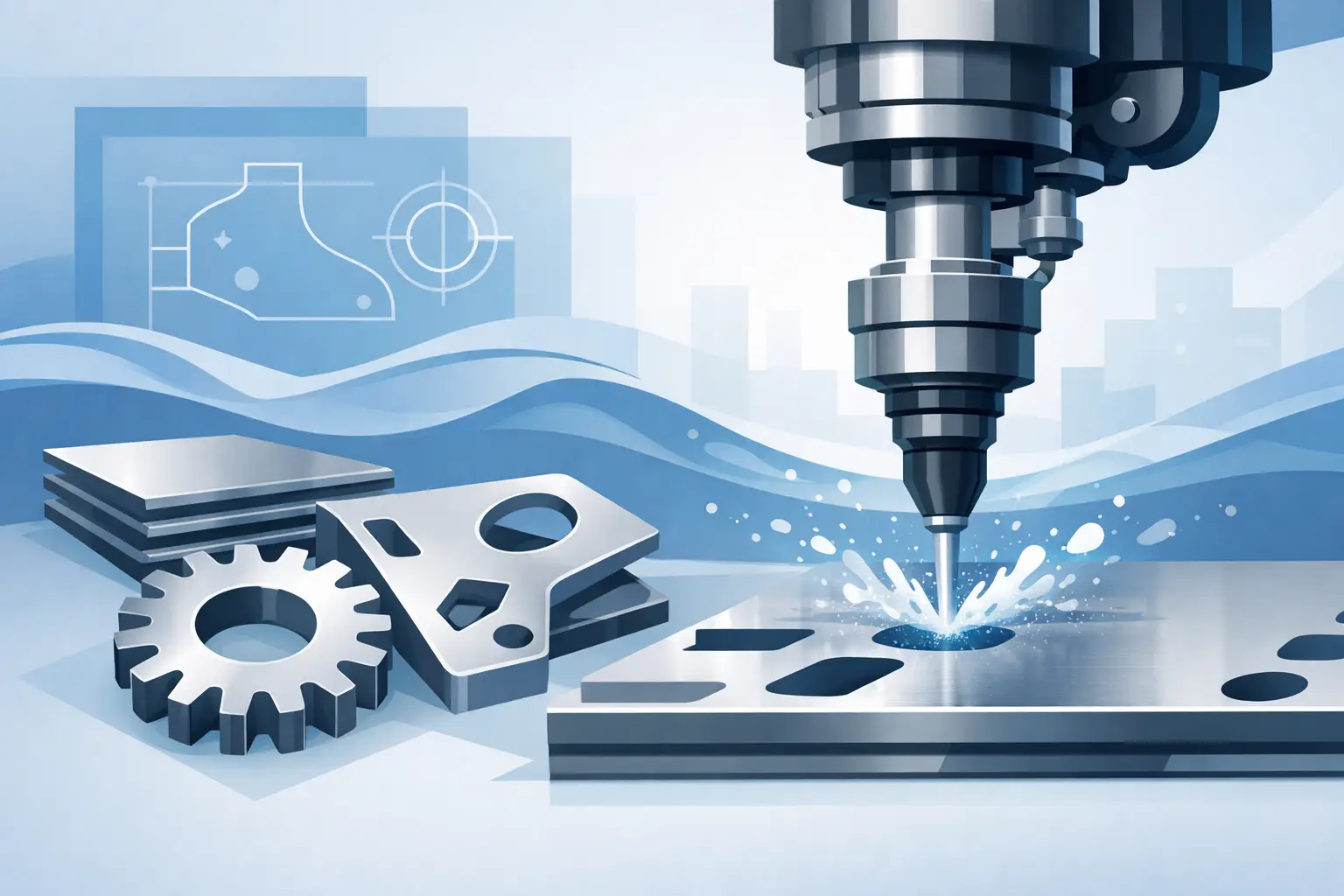
A part that arrives warped, heat-marked or a few millimetres out can hold up an entire fabrication job. That is where the practical waterjet cutting benefits become clear. By cutting with a high-pressure stream of water and abrasive rather than heat, waterjet technology produces accurate parts while protecting the material properties that matter to your project.
For Adelaide fabricators, builders, manufacturers and designers, the result is straightforward: clean, reliable cut components that are ready for the next stage of work. Whether the requirement is a stainless steel bracket, aluminium panel, thick steel base plate, custom screen pattern or foam insert, the right cutting process can save time well beyond the cutting table.
Waterjet cutting benefits start with a cold-cut process
A CNC waterjet directs water at pressures up to 60,000 PSI through a small nozzle. For hard materials, an abrasive is introduced into the stream to cut through the workpiece with controlled force. Unlike thermal cutting methods, waterjet cutting does not create a heat-affected zone.
That distinction matters when material performance, finish and dimensional stability are non-negotiable. Steel does not suffer heat distortion around the cut. Stainless steel is not left with heat tint that may need additional treatment. Aluminium is less likely to warp, and materials that do not respond well to heat can be cut without being melted or burnt.
For a fabricator, this can mean less corrective work before welding, folding, machining or assembly. For an architectural project, it helps preserve the appearance of exposed materials. For a designer working with a specialised product, it means the cut is less likely to compromise the material itself.
Better material integrity where it counts
Heat can change more than the appearance of a cut edge. Depending on the material and process, it can affect hardness, create local stress and alter corrosion performance. A cold-cut waterjet avoids those issues, making it particularly useful for components where the edge will remain visible or where the finished part must perform consistently under load, weather or wear.
This is not to suggest waterjet is automatically the best process for every job. Laser cutting can be faster for many thin metal parts and is often an excellent production choice. The benefit of having both processes available is being able to choose based on the material, thickness, required finish and delivery deadline rather than forcing every part through one machine.
Precision without limiting the design
Waterjet cutting is valued for its ability to follow complex CNC profiles with high accuracy. Tight internal corners, detailed apertures, interlocking forms, lettering, curved patterns and repeat components can all be cut directly from a supplied drawing or developed design file.
This makes waterjet an effective choice when a job cannot be reduced to simple straight cuts. A decorative aluminium feature, a machine component with multiple holes, or a custom gasket pattern may all need precise geometry across every piece. Consistent cutting supports easier fit-up on site and reduces the time spent modifying parts by hand.
Precision also brings value to repeat work. Once a design is correctly prepared and programmed, replacement parts and future batches can be produced to the same profile. That is useful for maintenance teams, production businesses and fabricators managing staged installations.
Fine detail in thick materials
Thicker plate can make detailed work difficult with conventional methods. Waterjet is capable of cutting a broad range of thicknesses while maintaining the flexibility to create intricate profiles. The exact result depends on the material, thickness, tolerance and edge-quality requirement, but waterjet opens up options that can be impractical with manual cutting.
There are still design considerations. Very tight internal radii, tiny features and demanding tolerances should be discussed before production, particularly in thick material. A capable cutting partner will assess the drawing and recommend practical changes where needed, rather than cutting a design that is unlikely to perform as intended.
One process, a broad range of materials
Material versatility is one of the most useful waterjet cutting benefits. Waterjet can cut steel, stainless steel and aluminium, along with many non-metal materials such as foam, rubber, plastics, stone, tiles and composite products suited to the process.
That flexibility helps projects involving more than one material type. A shopfitter may need aluminium trim components and foam packing inserts. A manufacturer may require stainless steel covers alongside polymer guards. A designer may be testing a pattern across metal and decorative sheet material before committing to a larger run.
Because the process is cold, it is especially valuable for materials that can melt, burn, delaminate or release unpleasant fumes when cut with heat. Material handling remains important, and every material should be assessed for suitability, but the waterjet process gives customers more freedom to specify the material that best suits the application.
Clean edges can reduce downstream work
A quality cut is not only about the profile being correct. Edge condition affects how quickly a component can move into fabrication, finishing or installation. Waterjet cutting can deliver a clean edge with minimal burr, reducing the need for grinding and deburring on many jobs.
The required edge finish should be set at the quoting stage. Faster cutting may be suitable for concealed structural parts or components that will be welded and finished later. Slower, higher-quality cutting may be worthwhile for exposed architectural panels, precision components or parts that need to go straight into assembly.
That choice is commercially important. Paying for a premium edge where it will never be seen may add unnecessary cost. Selecting a fast cut for a visible feature panel can shift the cost to labour later. The best outcome comes from matching the cut quality to the real requirement of the finished part.
Less waste, smarter use of valuable material
Material costs add up quickly, particularly with stainless steel, aluminium and specialist sheet products. CNC nesting arranges parts efficiently on the sheet or plate, helping reduce offcuts and make better use of supplied material.
Waterjet’s narrow cutting stream also assists with efficient part placement. Combined with accurate programming, this can be beneficial for custom one-off work as well as repeated production batches. It does not eliminate waste altogether – every cutting process has kerf, handling constraints and practical spacing requirements – but careful nesting can make a meaningful difference to material yield.
For projects with expensive customer-supplied material, accuracy and handling are equally important. Correct identification, careful loading and clear communication around orientation, grain or finished faces help protect the material before a single cut is made.
Fast outsourcing without compromising control
Buying and running precision cutting equipment requires capital, trained operators, programming capability, maintenance and floor space. For many South Australian businesses, outsourcing is the more practical option, especially when workloads fluctuate or a project needs capabilities beyond the workshop’s usual setup.
A local cutting provider can turn a drawing into accurately cut parts while your team stays focused on fabrication, installation or production. The key is supplying clear information from the start: material grade and thickness, quantity, critical dimensions, tolerances, preferred edge quality and the required date.
Waterjet & Laser SA combines onsite CNC waterjet and laser cutting so customers can select the process that best supports their job. That is particularly useful when a project includes both thin sheet components where speed is a priority and thicker or heat-sensitive parts where cold cutting offers a clear advantage.
When waterjet is the right choice
Waterjet is often the strongest option when heat distortion is unacceptable, when material variety is high, or when detailed profiles are needed in thicker stock. It is also well suited to prototype work, custom fabrication and architectural pieces where accuracy and finish influence the final result.
Laser may be the better choice for high-speed cutting of thin metal sheet, particularly where the material and design suit the process. Sawing, machining or plasma cutting may also have a place depending on the geometry, budget and tolerance required. Good manufacturing decisions are not about choosing a favourite technology. They are about choosing the method that delivers the right part with the least avoidable rework.
Before releasing your next drawing, consider what happens after cutting. If the part needs to stay flat, retain its material properties, fit accurately and look clean without extensive finishing, waterjet cutting may be the step that keeps the whole project moving.