
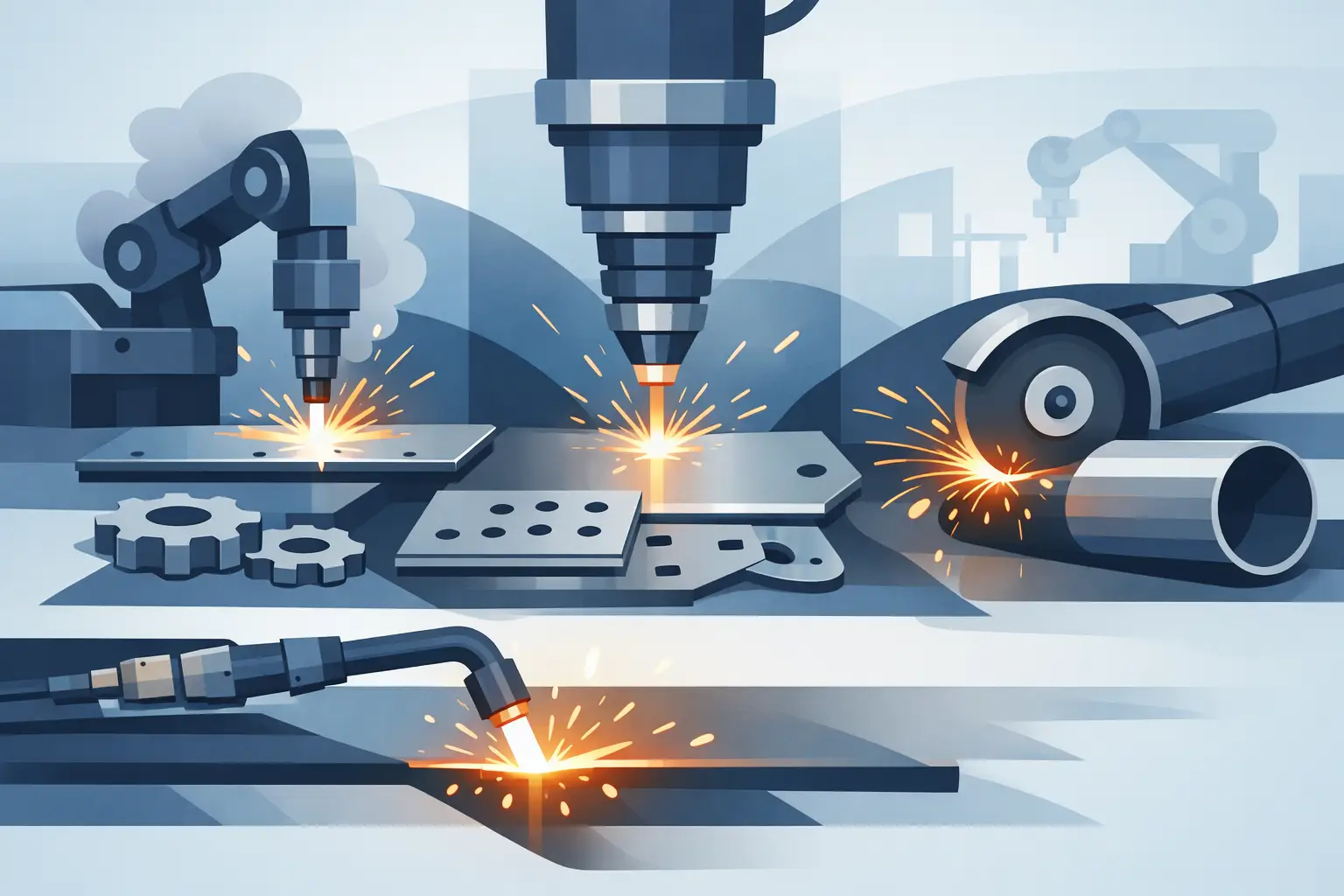
A cut edge can decide whether a component moves straight into fabrication or spends time on the bench being ground, dressed and reworked. For Adelaide fabricators, builders and project managers, metal cutting is not simply the first step in production. It affects fit-up, weld quality, material waste, lead times and the finished appearance of the job.
The right process depends on the material, thickness, tolerance, edge requirement and volume of parts required. CNC laser cutting and CNC waterjet cutting both produce accurate results, but they do so in very different ways. Choosing between them early can save time, reduce secondary work and protect the quality of valuable material.
Metal cutting starts with the job requirement
Before selecting a machine or sending through a drawing, consider what the finished part must do. A mild steel bracket for a production run has different requirements from a polished stainless steel architectural feature or a thick aluminium machine component.
Material type is a major factor. Steel, stainless steel and aluminium can all be cut accurately by laser, while waterjet is particularly useful where heat must be avoided or where the material is difficult to cut conventionally. Thickness matters too. Laser cutting is often the efficient option for thin to medium-gauge metal, especially where there are repeated profiles. Waterjet can handle substantial thicknesses and maintains material integrity because it is a cold-cut process.
The required edge condition should also be clear from the outset. If a part needs a clean profile ready for fabrication, powder coating or installation, the cut quality needs to suit that next stage. It is equally important to identify tight internal corners, small holes, intricate patterns and any areas where heat marks, distortion or hardening would create a problem.
Good cutting begins with good information. A clear CAD file, confirmed material grade and thickness, realistic tolerances, and a stated quantity allow the cutting process to be selected properly and quoted accurately.
CNC laser cutting for speed and repeatability
Laser cutting uses a focused beam to melt or vaporise material along a programmed path. Assisted gas clears the cut, allowing the machine to produce precise profiles at high speed. For many steel, stainless steel and aluminium jobs, it is an efficient choice for creating consistent parts with sharp detail.
Laser is particularly well suited to fabrication work where the material is relatively thin and the project includes many identical parts. Brackets, gussets, plates, covers, panels and folded-component blanks are typical examples. Once the drawing is programmed, CNC control delivers repeatable dimensions across the batch, helping fabricators maintain reliable assembly and fit-up.
Speed is a practical advantage, but it should not be considered in isolation. Laser cutting introduces heat to the material. On many jobs this is entirely acceptable, particularly when the part will be welded, folded or otherwise processed. On heat-sensitive material, however, the heat-affected zone can alter the edge condition or create slight distortion. The impact depends on material type, thickness, geometry and the job’s required finish.
Laser is also valuable for decorative metalwork. Fine perforations, detailed screen patterns, lettering and precise shapes can be cut efficiently when the design and material are suited to the process. For projects with a strong visual focus, clean programming and careful nesting help retain pattern consistency while reducing unnecessary waste.
Where laser cutting is usually the better fit
Laser cutting is often the first option when turnaround is critical, the job uses thinner sheet, or there is a high quantity of repeated parts. It provides a practical balance of speed, accuracy and cost for many everyday fabrication applications.
That said, thicker material or jobs requiring absolutely no thermal impact may point to waterjet instead. The fastest machine is not always the most efficient choice once secondary finishing, distortion risk and material value are taken into account.
Waterjet metal cutting where heat is not an option
Waterjet cutting uses a high-pressure stream of water, often mixed with abrasive garnet for metal, to erode the material along the programmed line. With pressure up to 60,000 PSI, the process cuts without creating a heat-affected zone.
That cold-cut capability is the defining benefit. There is no heat distortion, no burnt edge and no change to the material caused by thermal cutting. This makes waterjet a strong option for stainless steel, aluminium and other materials where preserving the original properties and appearance matters.
Waterjet also gives fabricators and designers useful flexibility. It can cut thick plate, intricate profiles and materials that may not suit laser processing. Beyond metal, the same process can be used on materials such as foam, making it useful where a project involves mixed material requirements or specialised components.
For a one-off custom part, an architectural detail or a complex component with fine internal features, waterjet can eliminate the need for multiple cutting methods. It is not necessarily the quickest choice for every thin-sheet production run, but it is often the right choice when edge integrity and versatility take priority.
Why cold cutting protects the finished part
Heat can change more than appearance. Depending on the metal and application, thermal processes can create edge hardening, discolouration or movement in the sheet. These issues may be minor, or they may become costly when parts need to align closely, retain a visible finish or perform in demanding service conditions.
A cold-cut waterjet edge helps reduce those concerns. This can mean less time correcting material before welding, machining or installation. It also gives designers more confidence when specifying intricate work in decorative stainless steel, aluminium features or thicker steel plate.
Accuracy is more than a machine specification
Precision cutting is not achieved by machinery alone. It relies on the complete process: reviewing the drawing, confirming the material, selecting the right cutting method, programming tool paths, nesting components efficiently and checking the completed parts.
Tolerances should be discussed in relation to the application. A simple structural plate may allow more variation than a component that must locate against machined holes or fit into an existing assembly. Over-specifying tolerance can add unnecessary cost, while under-specifying it can lead to assembly delays. The practical approach is to nominate the dimensions that genuinely control the fit and function of the part.
File preparation also makes a difference. DXF files are commonly preferred for two-dimensional cutting because they allow profiles, holes and cut-outs to be programmed directly. Drawings should be supplied at full scale, with duplicate lines removed and dimensions confirmed. Where there is uncertainty, a quick discussion before cutting is far cheaper than remaking parts after delivery.
Consider the work after the cut
The best metal cutting decision considers what happens next. Will the part be folded? Welded? Painted? Polished? Installed as a visible architectural feature? Each stage influences the preferred edge quality and process.
For example, laser-cut fabrication blanks may be ideal when the next operation is bending and welding in a busy workshop. A waterjet-cut stainless steel plate may be better for a visible installation where heat tint is unacceptable. Aluminium can be cut by either method, but the final application, thickness and finish requirement should guide the choice.
Material utilisation matters as well. Smart nesting places components efficiently within the sheet or plate, reducing offcuts and helping keep costs under control. This is especially worthwhile when working with premium stainless grades, aluminium plate or large-format material. Less waste supports both project budgets and more responsible material handling.
Local capacity keeps projects moving
Outsourcing cutting should make production easier, not create another point of uncertainty. Reliable lead times, clear communication and delivery capability matter when a fabrication team is coordinating labour, materials and site deadlines.
Waterjet & Laser SA combines onsite CNC laser and waterjet capability in Lonsdale, Adelaide, allowing the process to be matched to the actual job rather than forcing every order through one machine. That matters whether the requirement is a run of steel brackets, detailed aluminium panels, thick plate components or custom architectural work delivered across metropolitan Adelaide and regional South Australia.
The most useful question is not simply, “What is the cheapest way to cut this?” It is, “What process gives this part the best result at the point it needs to be used?” Bring the drawing, material details and end-use requirements to the conversation, and the right cutting method can keep the whole job on track.