
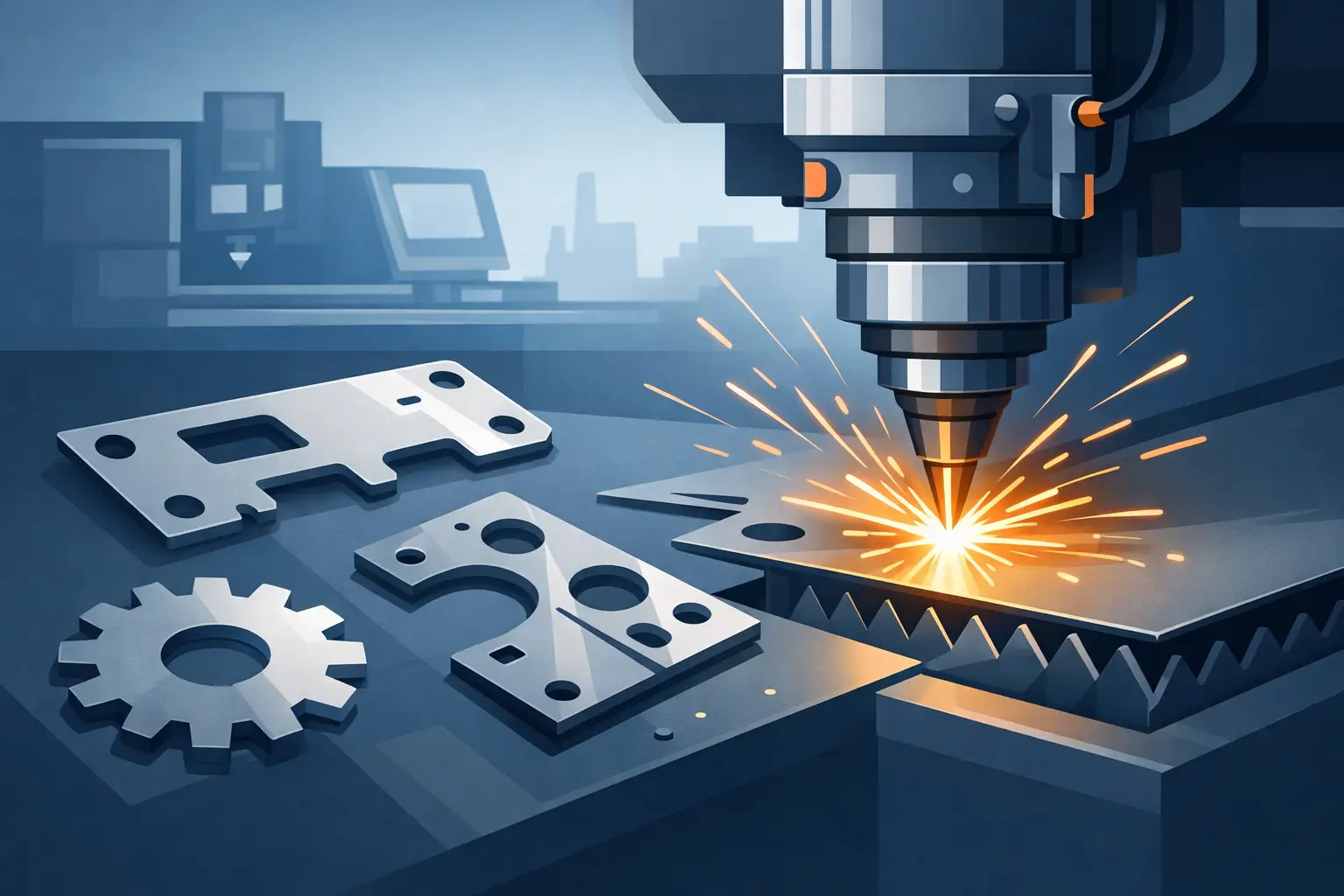
A part that arrives late, has a rough edge, or misses a critical dimension can stop an otherwise well-planned job. For fabricators, builders, manufacturers, and designers, laser cutting Adelaide services are not simply about cutting metal. They are about receiving parts that fit properly, look professional, and are ready for the next stage of production.
The right cutting method depends on the material, thickness, finish requirements, and detail in the design. Laser cutting is an efficient choice for many steel, stainless steel, and aluminum projects, particularly where speed, repeatability, and crisp profiles matter. When heat could affect the material or edge quality, waterjet cutting may be the better process. Having both options available makes the decision practical rather than one-size-fits-all.
When laser cutting is the right choice
Laser cutting uses a highly focused beam to cut programmed shapes from sheet material. It is especially effective for producing detailed profiles, holes, slots, brackets, panels, and repeat production components with a high level of consistency. Once a file is set up, the same component can be cut repeatedly without relying on manual measuring or hand finishing for every part.
For production and fabrication work, that consistency has a direct value. Components align more easily during welding and assembly, installers spend less time correcting fit-up issues, and project managers have greater confidence when ordering matching sets of parts. A clean, accurate profile also provides a stronger starting point for folding, powder coating, painting, or further fabrication.
Laser cutting is often a strong fit when the material is metal and turnaround matters. It can suit everything from simple gussets and mounting plates to intricate architectural features and custom decorative designs. The detail possible in a finished part gives designers room to work with fine lines, repeated patterns, lettering, and precise cutouts that would be slow or impractical to produce by hand.
What affects laser cutting Adelaide jobs
A cut file is only one part of the job. Material type, thickness, tolerances, part quantity, and the intended use of the finished item all influence the most suitable process and the expected result.
Material and thickness
Steel, stainless steel, and aluminum each respond differently to heat and cutting settings. Thickness also changes the balance between speed, edge finish, and cost. A process that is ideal for a thin stainless panel may not be the best choice for a thicker aluminum component or a material that must remain completely free from heat effects.
This is where experienced advice matters. Rather than specifying a cutting method before the project has been reviewed, it is better to start with the part’s functional requirements. Does it need a clean visible edge? Will it be welded? Does it have tight fitting features? Is the material likely to distort under heat? Those answers guide the process.
Detail and tolerance
Small holes, narrow internal corners, fine slots, and detailed patterns need careful attention during file preparation and cutting. The drawing should clearly show the intended dimensions and scale, with holes and cutouts designed for the thickness and purpose of the material.
Tolerance requirements should also be discussed early. A decorative screen and a machine component can both be laser cut, but they are judged by very different standards. A design-led panel may prioritize appearance and pattern definition, while a production component may need repeatable dimensions for assembly. Clear communication prevents assumptions that cost time later.
Quantity and schedule
Laser cutting is valuable for one-off prototypes as well as larger batches. A single custom bracket can be cut from a supplied drawing, while repeat parts can be programmed for efficient production. The most economical option will depend on nesting, material availability, setup requirements, and how many identical parts are needed.
Lead time should be part of the first conversation, not an afterthought. If parts are needed for a booked installation, fabrication run, or shutdown window, the cutting provider needs to understand that deadline. Reliable local service is especially useful when a project changes and replacement or additional parts are required quickly.
Laser cutting or waterjet cutting?
Both technologies produce accurate parts, but they do not solve every job in the same way. Laser cutting brings speed and efficient processing to many metal applications. Waterjet cutting uses a high-pressure stream of water, up to 60,000 PSI, combined with abrasive where required, to cut material without introducing a heat-affected zone.
That cold-cut advantage can be significant. Waterjet cutting is suited to materials that may warp, harden, discolor, or lose integrity when exposed to heat. It can also cut a broad range of materials beyond metal, including foam and other materials suited to waterjet processing. For thick material, sensitive finishes, or unusual project requirements, waterjet may provide the cleaner technical solution.
The trade-off is that waterjet and laser have different operating speeds and costs depending on the job. There is no benefit in forcing a material through the wrong process. A capable cutting partner will assess the design, material, and finish requirements, then recommend the method that delivers the best balance of accuracy, edge quality, turnaround, and budget.
Preparing a file for precision cutting
Good results begin before the machine starts. A clear CAD drawing helps reduce delays, questions, and avoidable material waste. Vector-based files are generally the most useful starting point because they provide defined cutting paths rather than a low-resolution image that must be recreated.
Before sending a file, check that dimensions are correct and that the drawing is at full scale. Remove duplicate lines, make sure open shapes are intentional, and identify any engraving, fold lines, or features that are not meant to be cut through. If the part needs material supplied, confirm the grade, thickness, and finish required. If the material is being provided by the customer, its condition and dimensions should be known before production is scheduled.
For customers who only have a sketch, sample, or concept, an early discussion can still be worthwhile. Some designs need minor adjustments to improve cut quality, material use, or fabrication practicality. A small change to a corner, slot, or connection point can make a component easier to manufacture without compromising its purpose or appearance.
Beyond the cut edge
The value of professional cutting is not measured only by how accurately the machine follows a line. It is measured by how effectively the part performs once it reaches the workshop, site, or customer.
For fabricators, accurate cut parts reduce layout time and support cleaner assembly. For builders and project managers, dependable supply helps keep trades and installation schedules moving. For architects and designers, detailed cutting makes it possible to turn a digital pattern into a durable physical feature, whether it is a privacy screen, signage element, façade detail, or custom interior panel.
Material utilization also matters. Efficient nesting can reduce offcuts and make better use of each sheet, which supports cost control and reduces unnecessary waste. It is one reason a cutting provider should look at the full job rather than treating each shape as an isolated item.
Local capacity makes project changes easier
Outsourcing cutting should remove pressure from a project, not create more administration. Local access to CNC laser and waterjet cutting gives Adelaide customers a practical option when in-house capacity is limited, equipment investment is not justified, or a design requires a process outside the workshop’s usual capability.
Waterjet & Laser SA combines onsite laser and waterjet capability with long-standing cutting and fabrication experience. That combination is useful when a job includes multiple materials, varied thicknesses, or a mix of functional and decorative components. It also means customers can discuss the result they need rather than trying to guess the machine that should produce it.
Delivery coverage across metropolitan Adelaide and country regions adds another level of support for businesses managing work beyond the city. For time-sensitive projects, clear communication about drawings, material, quantities, and deadlines is the fastest path to accurate parts and realistic scheduling.
Choose the process around the finished result
The best cutting decision starts with the end use. Think about how the component must fit, how it will be finished, what material behavior must be preserved, and when it needs to be on the workshop floor. From there, laser cutting, waterjet cutting, or a combination of both can be selected for a reason.
A well-cut part creates momentum. It lets the next trade start work with confidence, helps a design retain its intended detail, and keeps a project moving toward installation instead of back to the drawing board.